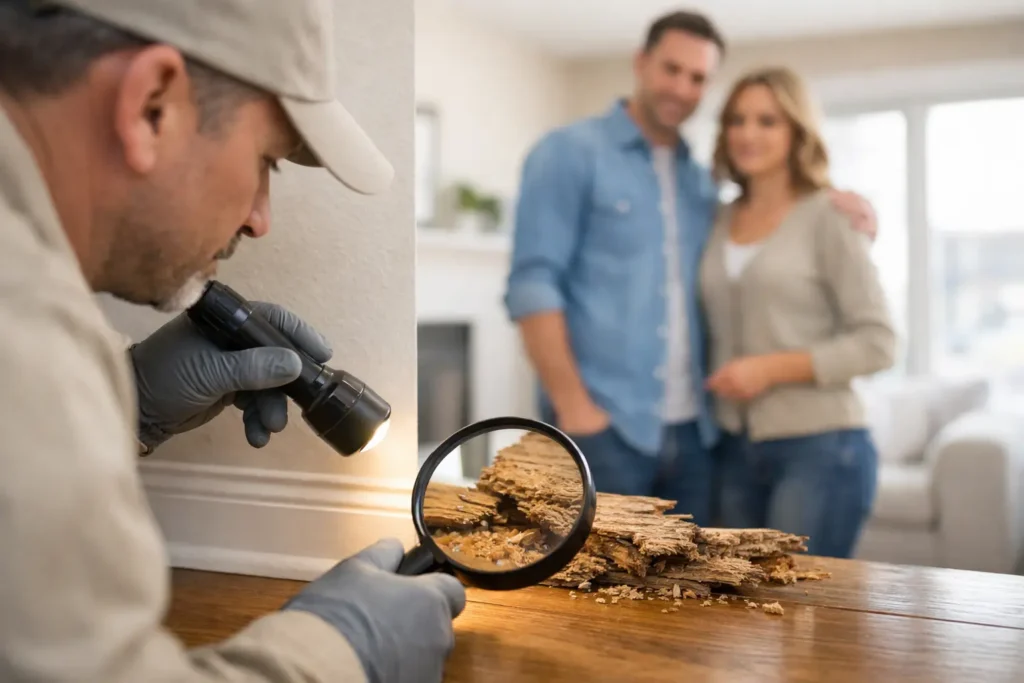
A freshly painted basement wall, new flooring, and a tidy yard can make a home feel ready for move-in. They cannot show you what may be happening behind drywall, beneath a porch, or inside a crawl space. A termite inspection for home buyers gives you a professional look at visible evidence of wood-destroying insects before you take ownership of the property.
For Maryland buyers, this inspection is not a formality to rush through during a busy contract period. Termites can remain active in concealed areas while the home appears well maintained. A clear inspection report helps you understand the condition of the property, ask the right questions, and make decisions with fewer surprises after closing.
Why a Termite Inspection Matters Before Closing
Termites feed on materials containing cellulose, including framing lumber, trim, flooring components, and other wood features. Over time, their activity can weaken wood and create damage that is expensive and disruptive to repair. Because termites often travel through soil or inside protected spaces, homeowners may not see them until the problem has been present for some time.
A standard home inspection is valuable, but it does not always provide the focused evaluation required for wood-destroying insects. A licensed pest professional looks for conditions, damage patterns, and signs of activity that may not be obvious during a general walkthrough. In many real-estate transactions, buyers also need a formal Wood-Destroying Insect Inspection Report, often called a WDI report.
The report is useful for more than checking a box for a lender or transaction requirement. It creates a record of what was visible and accessible on the day of the inspection. If signs of termites, prior damage, or conditions that encourage activity are found, the buyer and real-estate team have an opportunity to address them before the transaction moves forward.
What a Termite Inspection for Home Buyers Includes
A thorough termite inspection focuses on accessible areas where termites are likely to enter, travel, or feed. The technician examines the foundation, basement, crawl space, garage, utility areas, porches, decks, and visible structural wood. Exterior areas around the home are also important because termite activity often begins in the soil near the foundation.
The inspector looks for evidence such as mud tubes on foundation walls, damaged or hollow-sounding wood, small openings in wood surfaces, and areas where wood is in contact with soil. Swarmers or discarded wings may also indicate that termites have been active nearby. The inspection may identify previous termite activity as well, which should be evaluated carefully to determine whether it appears old, whether repairs are visible, and whether there is evidence of current activity.
Moisture conditions receive attention, too. Leaking plumbing, poor drainage, damp crawl spaces, and inadequate ventilation can make parts of a structure more attractive to termites and other pests. These conditions do not prove termites are present, but they are useful prevention findings for a buyer who wants to protect the home long term.
An inspection is limited to areas that can be safely seen and reached at the time of the visit. Finished walls, stored belongings, insulation, locked spaces, and low-clearance areas can restrict visibility. A professional report should make those limitations clear rather than suggesting that inaccessible areas were fully examined.
Active Termites, Old Damage, and Risk Conditions Are Different Findings
Not every termite-related finding means the same thing. Active infestation, evidence of prior infestation, damage, and conducive conditions are separate issues. Understanding that difference keeps buyers from either dismissing a serious concern or assuming the worst from a minor maintenance item.
Active evidence may include live termites or fresh mud tubes. This calls for prompt attention and a defined plan to address the activity. It can also lead to further discussion about repairs when damaged wood is present.
Old damage or evidence of a previous treatment does not automatically mean termites are currently active. A qualified inspector can explain what was observed, but concealed damage may require a contractor or other appropriate professional to assess the extent and structural implications. Buyers should avoid assuming that repaired paint or a past service record answers every question.
Conducive conditions are warning signs that can often be corrected. Wood mulch piled high against siding, stacked lumber near the home, clogged gutters, and water collecting near the foundation can increase risk. Addressing these conditions is part of practical prevention, even when no active termites are found.
How the Inspection Can Support Your Purchase Decision
A termite inspection gives buyers information they can use during the inspection contingency period. If the report identifies activity or visible damage, share it promptly with your real-estate agent and review the next steps allowed by your contract. Depending on the findings, that may involve requesting treatment, asking for further evaluation of damaged areas, or confirming that conditions that invite termite activity will be corrected.
The right response depends on the home and the report. A small, localized concern is different from extensive visible damage or an inaccessible crawl space with limited inspection access. Older Maryland homes may have a history of repairs and past pest activity without presenting an active problem today. What matters is having reliable documentation and enough detail to make an informed decision.
Keep copies of the WDI report, any treatment documentation provided during the transaction, and records of repairs or drainage improvements. These documents can be useful after you move in, especially when planning maintenance or establishing a prevention schedule.
Questions Home Buyers Should Ask
Once you receive the inspection report, ask direct questions that help turn findings into a plan. If termites are found, ask where activity was observed and whether visible damage was noted. If the report refers to prior activity, ask what evidence supports that conclusion and whether there are signs of current infestation.
You should also ask which areas could not be inspected and why. A finished basement, a cluttered storage room, or a sealed crawl-space access point may leave important areas out of view. Knowing the limits of the inspection helps you decide whether more evaluation is needed.
Finally, ask about prevention. A good inspection should not end with a finding alone. It should help you understand maintenance steps, moisture concerns, possible entry points, and whether ongoing monitoring makes sense for the property.
Protecting the Home After You Move In
Closing day is not the end of termite prevention. Once the property is yours, keep the foundation area clear of wood debris, maintain drainage so water moves away from the house, and repair leaks as soon as they are discovered. Check that mulch and soil are not covering siding, trim, or weep holes.
Regular inspections are especially helpful for homes with crawl spaces, older wood features, past termite history, or moisture concerns. Prevention works best when it combines inspection, attention to conditions around the home, exclusion where appropriate, and follow-up monitoring.
For central Maryland buyers, Q Pest Control provides WDI inspections performed by licensed, state-certified technicians who understand the construction and pest pressures common in the Baltimore metro area. The goal is straightforward: give you clear findings and practical next steps so you can move forward with confidence.
Before your inspection deadline arrives, make room for a termite inspection alongside the rest of your due diligence. A careful look at what is visible today can help protect the home, the people who will live there, and the plans you are making for tomorrow.