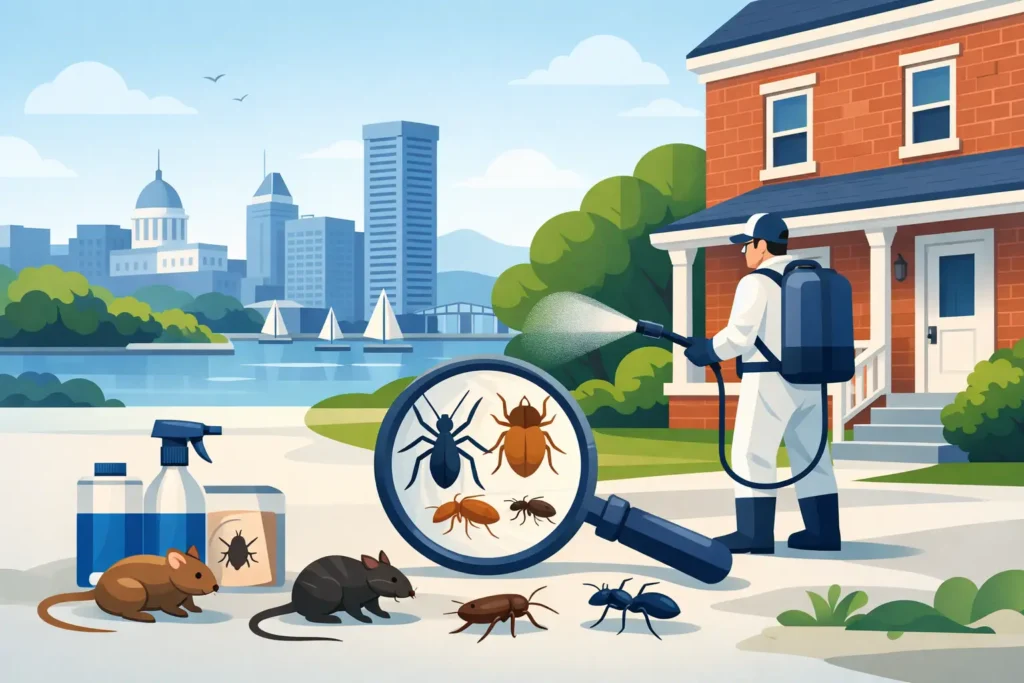
Baltimore homes give pests plenty of reasons to move in: older foundations, rowhome walls that connect from property to property, damp basements, mature trees, and changing Mid-Atlantic weather. Effective pest control for Baltimore homes starts with more than treating what is visible. It means finding where pests are entering, what is helping them survive, and how to keep the problem from returning.
A few ants at the kitchen counter may be a seasonal nuisance. Roaches, rodents, termites, bed bugs, or recurring mosquitoes call for a more careful response. The right solution depends on the pest, the condition of the property, and whether the goal is immediate relief, long-term prevention, or both.
Why Baltimore Pest Problems Often Repeat
Many pest issues begin outdoors but become indoor problems through small gaps and overlooked conditions. Mice can fit through openings about the size of a dime. Ants follow utility lines, cracks, and moisture into kitchens and bathrooms. Cockroaches can travel between attached homes, apartment units, and shared wall voids.
Baltimore’s humid summers also support mosquitoes, ants, and roaches, while colder months send rodents searching for warmth, water, and food. A treatment may reduce activity quickly, but pests can return if entry points remain open or conditions around the home continue to attract them.
That is why a prevention-focused plan generally includes inspection, targeted treatment, exclusion work, and follow-up monitoring. Spraying without addressing the source can be appropriate for a short-term issue, but it is rarely the whole answer when activity keeps coming back.
Start With a Professional Inspection
A thorough inspection turns a frustrating pest sighting into a clear plan. A licensed technician looks beyond the room where pests were noticed and examines the conditions that may be supporting them. This can include the basement, crawl space, attic, exterior foundation, garage, utility penetrations, plumbing areas, and yard conditions near the structure.
For rodents, technicians look for droppings, rub marks, gnawing, nesting materials, and gaps around pipes, vents, doors, and foundations. For roaches, the inspection focuses on moisture, food sources, hiding areas, and signs of activity in kitchens, bathrooms, appliances, and wall voids. Termite inspections require a different approach, with attention to mud tubes, damaged wood, moisture issues, and areas where wood contacts soil.
Inspection also helps avoid unnecessary treatment. If occasional ants are entering through one window frame, a targeted approach and sealing may make more sense than a broad service plan. If there is widespread roach activity or evidence of rodents in multiple areas, a more involved treatment and follow-up schedule may be needed.
What Homeowners Can Do Before Service
You do not need to solve the infestation before calling for help. Still, a few practical steps can make treatment and prevention more effective. Store pantry food in sealed containers, clean crumbs and grease from kitchen surfaces, repair obvious plumbing leaks, and reduce clutter where pests can hide. Outside, keep trash containers closed and move firewood, leaf piles, and stored materials away from the foundation when possible.
These steps are not a substitute for professional service. They simply remove easy food, water, and shelter that can make a home more attractive to pests.
Match Treatment to the Pest
A dependable pest-control plan is specific to the problem. Different pests have different behaviors, and using the same method for every situation can waste time and leave the home vulnerable to reinfestation.
Ants, Roaches, and Other Crawling Insects
Ant control often involves identifying the trail, nesting location, and moisture source. Some ant species nest outdoors and forage inside, while others may be established within wall voids or damp areas of the home. Treatment may include carefully placed products, exterior protection, and recommendations for sealing access points.
Cockroach control requires consistency. Roaches hide in tight, warm spaces and may survive if only the insects seen in the open are treated. Professional service can target active areas while addressing harborage sites, sanitation conditions, and pathways from neighboring units or shared structures. Follow-up is especially valuable when roach pressure is heavy.
Rodents and Wildlife Entry Points
Rodent control is not just about removing the mouse or rat already inside. It should include locating and sealing the routes that allow more rodents to enter. Common entry points include damaged door sweeps, gaps around utility lines, open vents, foundation cracks, and spaces where additions meet the original structure.
Exclusion is one of the most valuable parts of rodent prevention. A home can be clean and still have rodents if it offers an easy opening from the outside. The best plan combines removal methods, safe placement of control materials where needed, and durable repairs that reduce future access.
Termites and Wood-Destroying Insects
Termites can cause significant structural damage without creating obvious early warning signs. Swarmers, discarded wings, mud tubes, hollow-sounding wood, or bubbling paint may indicate a problem, but a property can have termite activity with few visible clues.
Professional termite control begins with a detailed inspection and a treatment recommendation based on the structure, construction type, and level of activity. Homebuyers should also consider a wood-destroying insect inspection when a transaction requires documentation or when they want a clearer picture of the property’s condition before closing.
Mosquitoes and Bed Bugs
Mosquito control works best when exterior treatment is paired with reducing standing water around the property. Birdbaths, clogged gutters, flowerpot trays, tarp folds, and other small water-holding areas can become breeding sites. Seasonal mosquito programs can help make yards more comfortable, especially for families who spend time outdoors.
Bed bugs require a deliberate, detailed response. They can spread through luggage, furniture, clothing, and shared living environments, and they are not a sign of poor housekeeping. Prompt professional inspection, clear preparation instructions, and follow-up service are essential because bed bugs can hide in seams, cracks, and furniture joints.
Choose One-Time Service or Ongoing Prevention
One-time treatment can be a sensible choice for a limited, isolated problem. A wasp nest, a single ant issue, or a newly discovered mouse entry point may be resolved with targeted service and exclusion work. The decision changes when pests are recurring, seasonal, or connected to ongoing conditions around the home.
Quarterly or monthly pest service provides routine monitoring and protection for homes with a history of ants, roaches, spiders, rodents, or other repeated activity. It allows technicians to spot changing conditions before they become a larger infestation. For busy households, this can be more practical than waiting until pests are visible again.
The trade-off is straightforward: ongoing service is an investment in prevention, while one-time service addresses a current concern. Neither is automatically right for every property. A trustworthy recommendation should reflect the pest pressure, the home, and the homeowner’s goals instead of relying on a one-size-fits-all package.
Keep Children, Pets, and Daily Life in Mind
Homeowners understandably want pest treatment that is effective without disrupting family life. A professional pest-management provider should explain what is being used, where it will be applied, whether preparation is needed, and when treated areas can be used normally.
Family-conscious service emphasizes targeted application rather than unnecessary exposure. Eco-friendly methods may be appropriate in some situations, particularly when exclusion, sanitation, habitat reduction, monitoring, and focused products can control the issue effectively. Safety recommendations still matter, so follow all technician instructions regarding pets, children, food items, and access to treatment areas.
When to Call for Help
Do not wait for a small issue to become an expensive repair. Call for an inspection when you see repeated droppings, active roaches during the day, termite swarmers or mud tubes, unexplained bites, chewed wiring, persistent ant trails, or mosquitoes making the yard difficult to use.
For more than 30 years, Q Pest Control has helped Maryland households identify the source of pest activity, protect their property, and build prevention plans that fit their needs. The most useful next step is simple: document what you are seeing, note where and when it occurs, and have a qualified technician assess the full property. Early action gives pests fewer places to hide and your household more room to feel at home.