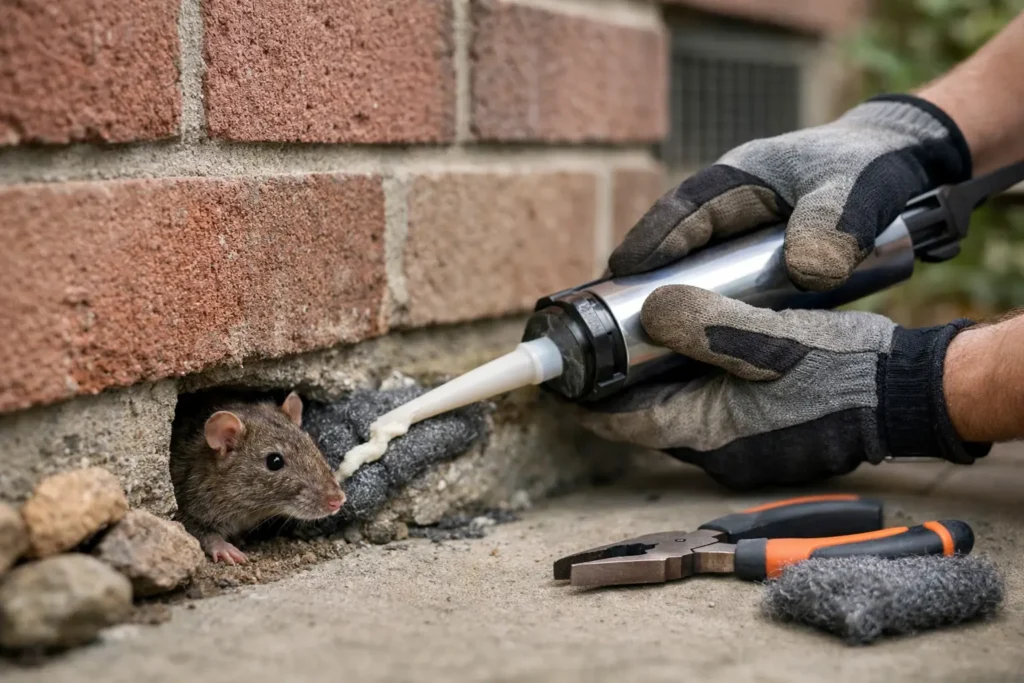
A mouse can fit through an opening about the size of a dime, while rats can use gaps that look far too small to matter at first glance. That is why learning how to seal rodent entry points is one of the most effective ways to protect a Maryland home or small business from recurring rodent activity. Trapping or removing the rodents already inside matters, but lasting control also requires closing the routes that let the next ones enter.
Rodent exclusion is not simply a matter of filling every visible crack. The right repair material depends on the location, the size of the opening, moisture exposure, and whether rodents can chew at the repair. A careful inspection and a well-planned approach can help protect your family, pets, stored food, insulation, wiring, and property.
Start Outside, Where Rodents Find Access
Most successful exclusion work starts with a slow inspection of the exterior. Walk the entire foundation in daylight, paying close attention to where different building materials meet. Rodents commonly use low, protected areas that are easy to overlook, including gaps around utility lines, basement windows, crawl-space vents, garage corners, and openings beneath siding.
Check door thresholds and garage doors as well. Daylight showing beneath a door is a clear invitation for mice, and worn weatherstripping can create an easy route into a garage or storage area. From there, rodents may move through wall voids, around pipes, or into finished portions of the building.
Look up, too. Rooflines, attic vents, damaged soffits, and gaps where cables or pipes pass through an exterior wall can provide access. Tree limbs and dense vegetation close to a building can make those upper areas easier to reach. Keep shrubs trimmed back from the structure so you can inspect the wall and avoid creating hidden travel routes.
How to Seal Rodent Entry Points With the Right Materials
The material used for a repair is as important as finding the opening. Lightweight foam alone may close a gap temporarily, but rodents can often chew through it. It works better as a backing or finishing material when paired with a chew-resistant barrier, not as the only defense.
For small gaps around pipes, cables, and foundation penetrations, copper mesh or stainless-steel mesh can be packed firmly into the void and sealed in place with an exterior-grade sealant. The mesh helps resist gnawing, while the sealant closes the edges and limits drafts and moisture. Do not block a pipe, drain, or required ventilation opening while making the repair.
Larger holes usually need a more durable patch. Galvanized hardware cloth with a small mesh opening is useful for vents and larger access points, while sheet metal can protect areas that receive frequent wear or are especially vulnerable to chewing. Secure patches to sound material on all sides. A loose edge can quickly become another access point.
Cracked masonry, deteriorated mortar, and holes in a foundation should be repaired with an appropriate masonry patch. Around door frames, replace damaged weatherstripping and install a sturdy door sweep that sits close to the threshold without dragging. For a garage door, inspect the bottom seal and side seals, then replace sections that are brittle, torn, or no longer make contact with the floor.
Prioritize the Gaps That Matter Most
A full inspection can reveal many minor imperfections, so it helps to address openings in order of risk. Start with any gap large enough for a mouse or rat near ground level, utility penetrations, doors, garages, crawl spaces, and areas where you have seen droppings, gnaw marks, rub marks, or nesting material.
If you hear activity in walls or ceilings, do not immediately seal every opening you find. Sealing an active route without assessing the interior can leave rodents trapped in wall voids or redirect them to another part of the building. This is especially relevant in homes with attics, finished basements, attached garages, or older additions where hidden gaps are common.
A professional inspection can identify the difference between an old opening and an active entry route. Technicians look for fresh evidence, likely travel paths, structural vulnerabilities, and conditions that encourage rodents to stay. That information helps ensure exclusion work supports the overall rodent-control plan rather than creating a new problem indoors.
Do Not Forget Vents, Drains, and Utility Areas
Vents need special care because they serve a purpose. Dryer vents, attic vents, crawl-space vents, and other openings must continue to function after they are protected. Use properly fitted, durable screening or vent covers designed for that use. Avoid using a material that restricts airflow, traps lint, or creates a maintenance issue.
Dryer vents deserve particular attention. A cover should open freely when the dryer is running and close afterward. Clean lint from the vent system regularly, since buildup can affect performance and create a separate household hazard.
In kitchens, laundry rooms, and utility spaces, inspect where plumbing lines enter walls or floors. A small gap behind an appliance can lead directly into a wall void. Seal accessible openings around those penetrations, and keep the area clean enough that signs of activity are easy to spot.
Reduce What Draws Rodents Close to the Building
Exclusion is strongest when combined with simple sanitation and storage habits. Rodents are more likely to test a building for entry when food, water, and shelter are readily available nearby. This does not mean a clean home is immune to rodents, but it does reduce the reasons they have to linger.
Store dry foods in containers with tight-fitting lids, clean crumbs from under appliances, and avoid leaving pet food out overnight when possible. Keep trash containers closed and move clutter away from foundation walls, garages, and storage areas. Cardboard boxes and crowded corners can provide nesting locations and make inspections harder.
Outside, correct moisture issues such as leaking spigots or poor drainage near the foundation. Keep firewood, stored materials, and stacked items off the ground and away from the building when practical. These changes make the property less accommodating and give you a clearer view of potential entry areas.
Check Repairs After Weather Changes
Maryland weather puts building exteriors through a lot. Seasonal temperature swings, heavy rain, settling, and normal wear can reopen cracks or loosen seals over time. Recheck common problem areas in the fall, after major storms, and whenever you complete exterior repairs or utility work.
Pay attention to new signs inside as well. Fresh droppings, shredded material, unusual odors, gnawing, or scratching sounds may indicate that an entry point was missed or that activity began before repairs were made. Prompt attention is easier on the structure than waiting for a small issue to become a larger infestation.
For small, visible gaps in an otherwise quiet property, a careful do-it-yourself repair may be enough. But if there is ongoing activity, repeated rodent problems, inaccessible openings, or uncertainty about where rodents are entering, professional exclusion is the safer path. Licensed technicians can inspect the structure, recommend durable repairs, address active activity, and provide follow-up monitoring based on the needs of your home or business.
Q Pest Control approaches rodent concerns with inspection, targeted control, exclusion, and prevention in mind. The goal is not just to close a hole, but to help keep rodents from finding another way in. A well-sealed building gives you a cleaner, more protected space and greater confidence that your family, pets, customers, and property are being looked after.