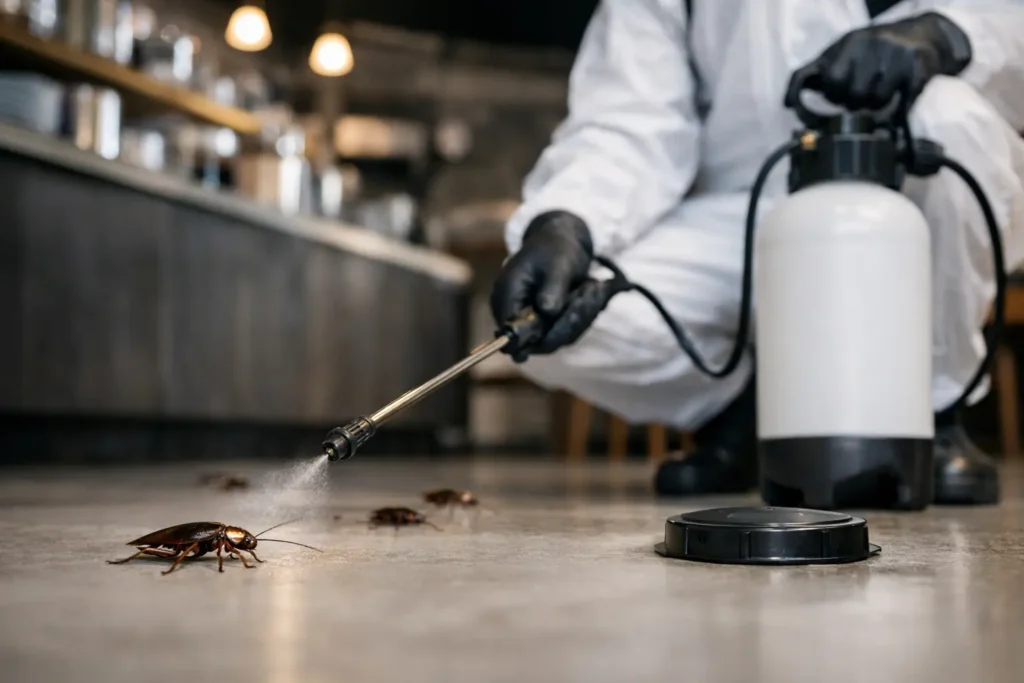
A cockroach seen near a register, break room, storage shelf, or restroom can quickly become more than an unpleasant surprise. For local shops, offices, restaurants, rental properties, and service businesses, cockroach control for small businesses protects the clean, dependable environment customers and employees expect. The right response is not simply treating the roach you saw. It is finding where activity started, reducing what supports it, and monitoring the property so the problem does not return.
Cockroaches are resourceful pests. They can hide in narrow cracks, move through wall voids and utility openings, and stay active in areas staff may rarely inspect. A business may appear clean at first glance while still providing the warmth, moisture, food residue, and shelter roaches need. That is why a focused, professional plan is often more effective than a quick do-it-yourself response.
Why Cockroach Activity Demands a Fast Response
Roaches can affect sanitation standards, employee comfort, and customer confidence. In food-related businesses, even a single sighting may raise serious concerns about back-of-house cleaning and storage. In offices, salons, retail spaces, and property management settings, roaches can create an uncomfortable workplace and damage the professional appearance owners work hard to maintain.
The species matters, too. Small German cockroaches commonly establish themselves indoors and reproduce rapidly when conditions are favorable. Larger roaches may enter from outdoor areas, drains, utility spaces, or gaps around a building. A trained inspection helps identify the type of roach involved and the likely source of activity, which guides the treatment and prevention plan.
Waiting can make the job harder. Roaches are usually most active after hours, so daytime sightings can indicate that hiding areas are crowded or that activity has expanded. Early action gives a business a better chance to correct the conditions that allowed the problem to develop before it disrupts daily operations.
Cockroach Control for Small Businesses Starts With Inspection
Effective service begins with a careful inspection, not assumptions. A licensed technician looks beyond obvious areas to identify where roaches are feeding, hiding, and traveling. Kitchens and break rooms are common starting points, but activity can also develop around floor drains, mop sinks, dishwashers, refrigerators, vending areas, cardboard storage, utility closets, and shared walls.
Signs may include live or dead roaches, pepper-like droppings, shed skins, egg cases, or an unusual stale odor in heavily affected areas. The technician also checks for conditions that support activity, such as moisture beneath equipment, open gaps around pipes, cluttered storage, leaking fixtures, and food debris in hard-to-reach locations.
For a small business, this inspection is valuable because it turns a vague concern into a clear plan. Instead of treating every room the same way, service can focus on active areas while addressing entry points and sanitation conditions that contribute to reinfestation.
The Conditions Roaches Look For
Cockroaches need very little to survive. A few crumbs behind a refrigerator, grease buildup around cooking equipment, moisture under a sink, or an unsealed opening near plumbing can be enough to sustain them. Businesses with frequent deliveries and shared commercial spaces may also have more opportunities for roaches to be carried in or move between units.
Cleaning is a major part of prevention, but it is not a substitute for professional pest management when an infestation is established. Staff can clean thoroughly and still miss hidden harborages behind equipment, inside wall gaps, or around utility lines. Treatment and sanitation work best together.
Business owners should pay close attention to food and waste handling. Keep dry goods in sealed containers when practical, remove trash on a consistent schedule, and avoid allowing recycling or cardboard to build up indoors. Clean spills promptly, including small amounts of syrup, coffee residue, grease, and pet food where applicable. At closing, check under counters and equipment rather than cleaning only visible surfaces.
Moisture control is equally important. Repair dripping faucets, drain standing water, and report plumbing concerns promptly. Roaches are often drawn to areas where water is consistently available, especially in kitchens, restrooms, and utility rooms.
Treatment Should Fit the Business and the Infestation
There is no one-size-fits-all answer for roach problems. The right approach depends on the roach species, level of activity, building layout, business type, sanitation needs, and whether adjoining units may be involved. A treatment plan for a small office may look different from one for a restaurant kitchen or multi-tenant retail space.
Professional treatment may include targeted applications in protected areas, baiting methods, crack-and-crevice work, insect growth control where appropriate, and follow-up monitoring. The goal is to reach roaches where they live and travel while keeping the process responsible for employees, customers, children, and pets who may be present at the property.
Preparation instructions matter. A business may need to clear certain storage areas, clean targeted spaces, improve access behind equipment, or coordinate service outside normal operating hours. Following those instructions helps technicians inspect and treat more effectively without creating unnecessary disruption.
One-time service can resolve some limited issues, particularly when the source is clear and conditions are corrected quickly. However, recurring monthly or quarterly service is often the better fit for businesses with ongoing food handling, frequent deliveries, shared walls, older buildings, or a history of pest pressure. Regular visits allow for inspection, monitoring, prevention, and adjustments before activity becomes visible to customers.
Exclusion Helps Keep Roaches From Returning
A treatment plan is stronger when it includes exclusion work. Roaches can enter through openings around plumbing, wall penetrations, door sweeps, damaged screens, gaps near utility lines, and cracks along baseboards. Sealing suitable access points reduces the routes pests use to enter and travel through the building.
Some gaps are easy for an owner or maintenance team to correct. Others require closer attention because sealing them could affect plumbing access, ventilation, or building operations. A professional inspection can help prioritize the areas that are most likely to matter rather than asking a business owner to guess.
Exclusion is especially useful in multi-unit buildings. If roaches can move through shared utility paths or walls, treating one suite without addressing access points may provide only temporary relief. In those situations, communication with property management and nearby occupants may be part of a more complete solution.
Give Staff a Simple Reporting Process
Employees are often the first people to notice a problem. A clear reporting process helps management respond before scattered sightings turn into a larger issue. Staff should know who to tell, what details to record, and why reporting matters even if they see only one roach.
Ask employees to note the date, time, exact location, and whether the roach was alive or dead. A photo can be helpful when it can be taken safely and without interrupting customer service. Those details help a technician identify patterns, such as repeated activity near a particular sink, delivery area, or appliance.
Avoid relying on random store-bought products as the main response. Misuse can scatter roaches into new hiding places, interfere with professional baiting efforts, and make it harder to understand where activity is concentrated. A coordinated plan gives the business a better chance of lasting results.
What Ongoing Monitoring Looks Like
After initial treatment, follow-up is where long-term protection takes shape. Monitoring devices placed in appropriate locations can show whether activity is declining, where roaches are still moving, and whether new pressure is developing. Technicians can use those findings to refine service rather than repeating the same approach each visit.
For small-business owners, this creates useful accountability. You should understand what was found, what was treated, what conditions need attention, and what the next visit will evaluate. Good communication also helps managers guide staff on sanitation and maintenance tasks without creating alarm.
Q Pest Control Inc. provides customized pest management for small businesses across central Maryland, combining inspection, targeted treatment, exclusion recommendations, and follow-up monitoring. With more than 35 years of experience, licensed and state-certified technicians can help business owners address current roach activity while building a practical prevention plan around their operations.
A clean, well-run business should not have to wait for a customer complaint to address a pest concern. When staff report sightings early, maintenance issues are corrected promptly, and professional monitoring stays consistent, roach control becomes part of protecting the workplace, the property, and the trust customers place in your business.