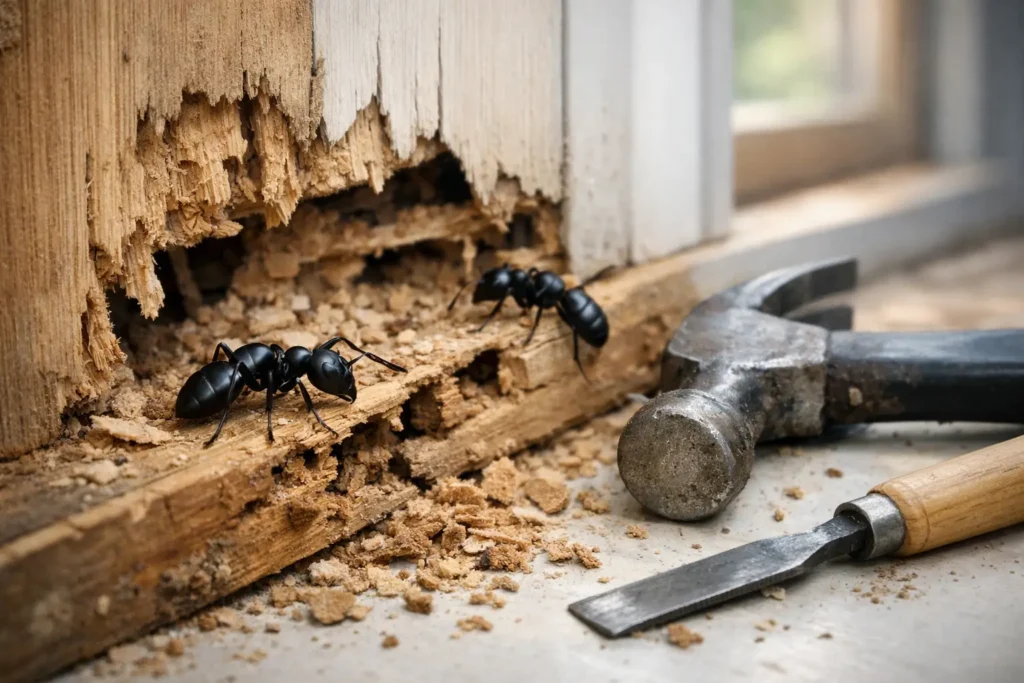
A few large black ants near a kitchen window may seem like a minor nuisance. But carpenter ant damage in homes can point to a nesting problem inside damp or previously damaged wood, where activity may continue out of sight. For Maryland homeowners, recognizing the difference between a few ants outdoors and an established indoor colony helps protect the structure before the problem expands.
Carpenter ants do not eat wood the way termites do. Instead, they excavate it to create smooth tunnels and nesting galleries. That distinction matters, but it should not create false reassurance. Over time, repeated nesting activity can weaken already compromised wood around windows, doors, decks, wall voids, and areas affected by moisture.
Why Carpenter Ants Choose Certain Areas of a Home
Carpenter ants need a suitable place to nest, and moisture is often part of the picture. Wood softened by a plumbing leak, roof issue, condensation, poor drainage, or past water damage is easier for them to excavate. They may also use existing gaps behind siding, trim, utility lines, or foundation openings to move between outdoor nesting areas and the home.
A colony may have a primary nest outdoors and smaller satellite nests closer to indoor food and moisture sources. That means finding ants in one room does not always reveal where the main activity is located. Ants seen in a bathroom, kitchen, laundry area, or near a window can be traveling from a hidden void elsewhere in the structure.
In central Maryland, carpenter ant activity often becomes more noticeable in spring and early summer, when colonies are active and winged reproductive ants may appear. Still, indoor sightings at any time deserve attention when they are frequent, concentrated in one area, or accompanied by signs of wood disturbance.
Signs of Carpenter Ant Damage in Homes
Carpenter ant damage is often hidden, so homeowners should look for patterns rather than wait for obvious structural problems. One of the clearest signs is a small pile of coarse, sawdust-like material called frass. Unlike ordinary sawdust from a repair project, frass may contain tiny wood fragments, insect parts, and other debris pushed from an excavated gallery.
You may find this material below a baseboard, near a window frame, under a deck edge, or around a hole in trim. Carpenter ants can also produce faint rustling sounds inside a wall or hollow wood feature when a large colony is disturbed, although this is not always easy to hear.
Other signs can include:
- Large black or dark reddish-black ants repeatedly appearing indoors, especially at night
- Winged ants inside the home, particularly when they emerge from the same area
- Small openings, cracks, or weakened sections in trim, framing, porch posts, or window surrounds
- Moisture stains, soft wood, peeling paint, or recurring condensation near ant activity
- A door, window, or section of trim that feels loose or sounds hollow when gently tapped
One sign alone does not confirm the extent of a problem. For example, winged ants could have come in from outdoors, and a small amount of debris may have another source. However, several signs together justify a professional inspection. Proper identification is important because treatment and repair decisions differ depending on the insect and the condition of the wood.
Where Damage Is Most Likely to Occur
Carpenter ants are drawn to protected locations where wood remains damp or has been damaged over time. Window and door frames are common trouble spots because failed caulking, worn exterior paint, and drainage issues can allow water to reach wood. Areas beneath rooflines, around chimneys, and near gutters can also become vulnerable when water does not move away as it should.
Inside, pay attention to bathroom walls, spaces beneath sinks, laundry rooms, garages, and basements. A slow leak can create the conditions carpenter ants prefer long before it becomes visible in a living space. Exterior structures such as decks, railings, steps, and porch posts may also support nesting activity and give ants a route toward the house.
Not every carpenter ant nest causes the same level of damage. A new or small satellite nest may be limited, while a colony that has occupied damp framing or structural wood for an extended period can create a more serious concern. The condition of the wood before ants arrived also matters. Sound, dry wood is less attractive than wood already affected by moisture.
Why Store-Bought Ant Products May Miss the Source
Killing the ants you can see may reduce activity for a short time, but it does not necessarily address the nest. Carpenter ants may travel a considerable distance from their nesting site, and their routes can change based on weather, food availability, and moisture. Spraying a visible trail can scatter activity or leave the hidden colony undisturbed.
A complete approach begins with identifying the ant, assessing activity, and inspecting likely nesting areas. A trained technician can look for entry points, moisture conditions, frass, damaged wood, and pathways that connect the exterior to the home. That information supports a plan designed for the actual source of the problem rather than just the room where ants were noticed.
For some homes, the right plan includes targeted treatment and follow-up monitoring. In others, exclusion work and moisture correction are equally important. If damaged wood is present, pest activity should be addressed before repairs are closed up so the underlying nesting issue is not left behind.
Protecting Your Home After Treatment
Long-term prevention is often about making the property less inviting to carpenter ants. Start with moisture control. Repair plumbing leaks, keep gutters clear, direct downspouts away from the foundation, and address roof or siding issues that allow water into wall areas. If a basement or crawlspace stays damp, improving drainage or ventilation may be part of the solution.
It also helps to reduce easy access. Seal gaps around utility penetrations, windows, doors, and damaged trim where appropriate. Keep branches and landscaping from resting against the home, and avoid storing damp lumber, firewood, or decaying wood directly beside the foundation. These steps cannot guarantee that ants will never appear, but they reduce favorable nesting and travel conditions.
Monitoring matters after active ants have been found. Continued sightings may indicate that a colony is still active, that another nest is present, or that an entry point has not been corrected. A recurring service program can be especially useful for properties with a history of ant activity, persistent moisture challenges, or heavy outdoor pressure.
When to Schedule a Professional Inspection
Do not wait for visibly crumbling wood before seeking help. An inspection is a sensible next step when you see large ants indoors repeatedly, find unexplained frass, notice winged ants inside, or discover soft wood near a moisture issue. It is also wise to have concerns evaluated before a real-estate transaction, renovation, or repair involving areas where wood-destroying insects may be active.
Q Pest Control uses inspection, targeted treatment, exclusion guidance, and follow-up monitoring to help Maryland homeowners address carpenter ant concerns with a clear plan. Licensed, state-certified technicians can help identify what is happening, locate conditions that support activity, and recommend practical next steps that consider children, pets, and the home itself.
A carpenter ant problem is easier to manage when the first signs are treated as useful information, not something to sweep away. Check the moisture, preserve any debris you find for identification, and arrange an inspection before hidden activity has more time to spread.