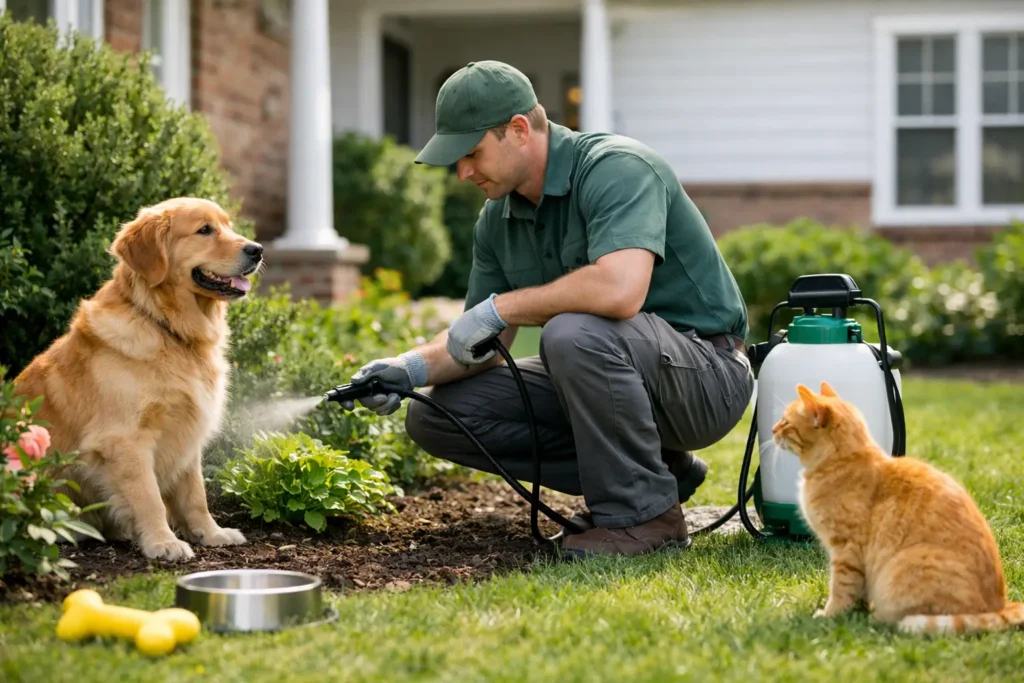
A dog nosing along a baseboard or a cat slipping behind the sofa can turn a pest problem into an immediate safety concern. Pet safe pest control treatments are not simply about choosing a product and hoping for the best. They require a careful plan that addresses the pest, the areas it uses, your pet’s habits, and the conditions that allowed the problem to start.
For Maryland homeowners, that plan often needs to account for seasonal ant activity, roaches in warm kitchen areas, mosquitoes around yards, rodents seeking shelter, and termites that can damage structural wood unnoticed. A professional approach protects your home while keeping treatment decisions responsible for the animals that make it home, too.
What Pet Safe Pest Control Treatments Really Mean
Pet safe does not mean every treatment is appropriate for every pet in every situation. A puppy that chews, a cat that investigates tight spaces, a bird cage near a treated area, or a pet with health sensitivities may call for different precautions. The safest approach begins with clear communication about the animals in your home, where they spend time, and any areas they can access.
A licensed technician should inspect before recommending service. That inspection identifies the pest, the severity of activity, entry points, moisture issues, harborage areas, and conditions that support reinfestation. With that information, treatment can be targeted instead of broadly applied throughout the home.
Targeted service matters because pest control works best as a complete process. Removing active pests is only one part of the job. Monitoring, sanitation guidance, exclusion work, and follow-up help reduce the need for repeated intervention while providing lasting protection for your household.
Start With the Pest and the Source
Different pests require different solutions. Treating ants is not the same as addressing rodents in an attic, mosquitoes near standing water, or bed bugs in bedrooms. A one-size-fits-all response can miss the source of the problem and create unnecessary disruption for your family and pets.
For example, ants commonly follow moisture and food sources. A service plan may focus on locating trails, identifying where they enter, and reducing access around utility lines, windows, and doors. Roach activity can be tied to cracks, appliance voids, plumbing areas, food residue, and clutter. The most effective plan reaches the areas roaches use while helping homeowners correct the conditions that support them.
Rodent control also depends heavily on inspection and exclusion. Sealing gaps around foundations, pipes, vents, and utility penetrations can reduce access to the structure. This is especially valuable for pet owners because it addresses the problem at its source rather than relying on a single reactive measure. If pets share spaces where rodent activity has occurred, a technician can explain the appropriate precautions for that area and the service plan.
Preparing Your Home and Pets for Service
Professional instructions should always guide your preparations. Before service, let the technician know about every pet in the home, including where pets eat, sleep, play, and are confined during the day. Mention aquariums, terrariums, cages, and any pet health concerns so the treatment plan can account for them.
In many cases, preparing a home is straightforward. Pet food and water bowls may need to be removed or covered, toys picked up, and pet bedding moved away from service areas when directed. Keep pets out of rooms being serviced, and follow the technician’s guidance on when they can return. Those directions depend on the pest, the location, the treatment method, and your specific home.
Outdoor service deserves the same attention. Dogs may investigate mulch beds, fence lines, patios, and foundation edges where insects travel. Ask which parts of the yard will be addressed and whether temporary access restrictions are needed. If mosquitoes are the concern, a complete plan can also include eliminating standing water around the property, where practical, and maintaining outdoor areas that encourage fewer breeding sites.
Prevention Makes a Home Safer for Pets and People
The strongest pet-conscious pest plan does more than treat visible activity. Prevention reduces the conditions that attract and shelter pests, helping households maintain a cleaner, more comfortable environment over time.
Start with food and moisture. Store pet food in sealed containers, clean up spilled kibble promptly, and avoid leaving bowls outdoors overnight. Repair plumbing leaks, dry damp areas near sinks and laundry rooms, and keep trash containers closed. These small habits can make a real difference for ants, roaches, and rodents.
Next, look at the exterior. Trim vegetation away from the foundation, keep firewood elevated and away from the house, and clear leaves or debris that hold moisture against exterior walls. Check door sweeps, window screens, and gaps near pipes and utility connections. Exclusion is a practical investment because it helps stop pests before they enter living areas where children and pets spend their time.
Inside, regular vacuuming and decluttering make it easier to spot activity early. Pay particular attention to kitchen corners, under appliances, basement storage, and pet feeding areas. Early signs such as droppings, damaged food packaging, insect sightings, shed skins, or small gaps around utility lines are worth addressing before a minor issue grows.
Why Follow-Up Is Part of Responsible Pest Control
Some pests do not disappear after a single visit, especially when an infestation has had time to develop. Bed bugs, roaches, rodents, termites, and persistent ant problems may require scheduled follow-up to confirm that activity is declining and to adjust the plan if conditions change.
Follow-up is also where a professional service becomes more precise. Monitoring can show whether pests are entering through a newly identified gap, whether a moisture issue remains, or whether activity is concentrated in a different part of the property. The technician can then recommend the next appropriate step instead of treating areas that do not need attention.
For recurring monthly or quarterly protection, ongoing visits help catch concerns earlier. This can be a sensible choice for homes with frequent seasonal activity, properties near wooded edges or dense neighborhoods, and small businesses that need to maintain clean, dependable customer and work environments. The right schedule depends on the pest pressure, the property, and the level of prevention you need.
Questions to Ask Before Treatment
A dependable pest management provider should be comfortable explaining the plan in plain language. Ask what pest has been identified, where activity is occurring, what preparation is needed, and what your pet access instructions will be. You should also understand what prevention steps can make the service more effective.
It is helpful to ask whether exclusion or repairs are recommended, when follow-up will occur, and what signs you should watch for after the visit. Clear answers help you protect pets, set realistic expectations, and participate in preventing pests from returning.
Q Pest Control brings more than 35 years of experience to Maryland homes and small businesses, with licensed, state-certified technicians who build service plans around the property and the problem at hand. That local, inspection-first approach helps families address pests thoughtfully while protecting their homes for the long term.
When a Professional Inspection Is the Right Next Step
Call for a professional inspection when you see repeated pest activity, notice damage around wood or insulation, find signs of rodents, or cannot identify where insects are entering. Urgent help is also appropriate when pests appear in food-preparation areas, bedrooms, pet spaces, or customer-facing business areas.
A clear plan can replace uncertainty with practical next steps: identify the pest, protect pets during service, correct entry points, and monitor the results. With careful treatment and consistent prevention, your home can remain a comfortable place for every member of the family, paws included.