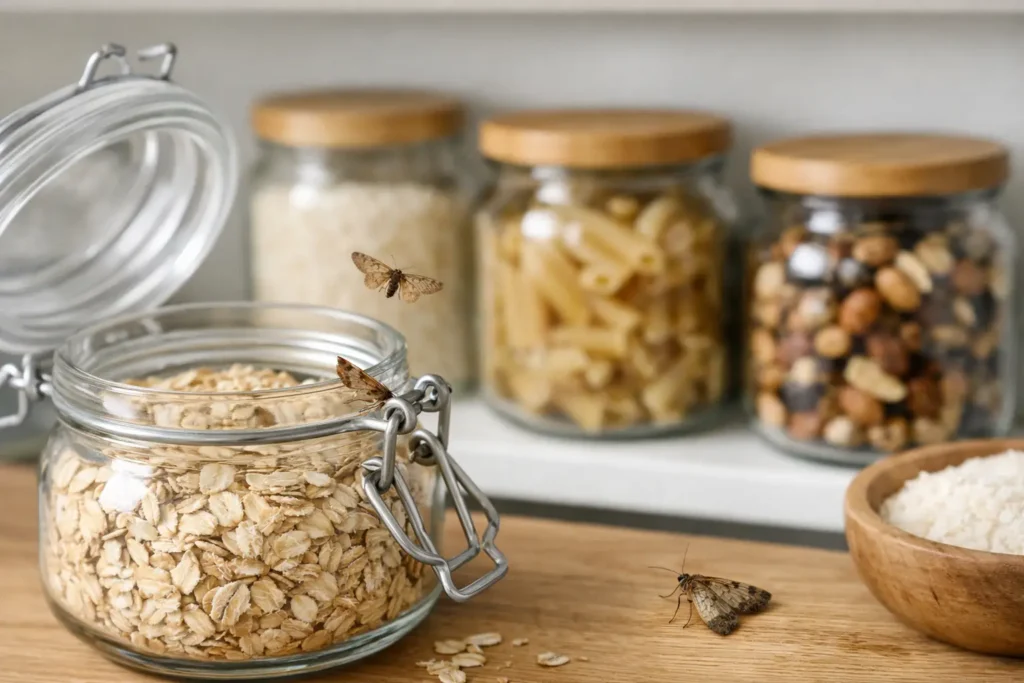
A moth fluttering from a bag of flour or rice is unsettling, but the insect you see is usually only part of the problem. Pantry moths often begin their life cycle inside dry food packages, where eggs and larvae can go unnoticed for weeks. Knowing how to prevent pantry moths starts with protecting the food you bring home, checking stored goods regularly, and responding quickly to any sign of activity.
For homeowners and small businesses in the Baltimore area, consistent storage and sanitation habits make a meaningful difference. Pantry moths are not a reflection of an unclean kitchen. They can arrive in sealed packages from a store, then spread through a cabinet if conditions allow.
Know What Pantry Moths Target
Indian meal moths are the pantry moth most people encounter indoors. Adults are small, often with pale gray and coppery-brown wings, and may be seen near cabinets, ceilings, or pantry lights. Their larvae are cream-colored caterpillars that feed on dry goods and leave behind fine webbing.
They commonly infest flour, cereal, pasta, rice, dried fruit, nuts, seeds, pet food, baking mixes, spices, birdseed, and snack products. They can also get into less obvious items, including tea, powdered drink mixes, and chocolate. A cardboard box, folded bag, or thin plastic package is not a reliable barrier.
Look for webbing in a package, clumps in loose food, tiny larvae, or small moths resting in pantry corners. Larvae may crawl away from the food source before pupating, so check shelf edges, the underside of shelves, cabinet hinges, and cracks around the pantry as well.
How to Prevent Pantry Moths Before They Get Established
The most effective prevention begins as soon as groceries enter the house. Inspect packages that will sit in storage for a long time, especially flour, grains, cereal, baking supplies, dried fruit, and pet food. Do not assume an unopened box is free from infestation. Pantry moths can be present before a package reaches your kitchen.
Transfer susceptible dry goods into clean, airtight containers made of glass, metal, or sturdy hard plastic. Containers with tight-fitting lids keep moths from reaching food and make it easier to spot a concern early. Label containers with the item name and purchase date so older products are used first.
If you buy pantry staples in bulk or do not expect to use them soon, freezing them for several days after purchase can help prevent an introduced pest from developing in your pantry. Allow items to return fully to room temperature before transferring them to containers. This helps avoid moisture buildup that can affect food quality.
Pet food deserves the same attention as human food. Keep it in its original bag only if the bag is placed inside a sealed container, and avoid leaving large open bags in garages, utility rooms, or pantries. Use older food first and clean the storage container between refills.
Keep Pantry Shelves Less Inviting
A pantry does not need to look spotless at all times to remain well protected, but food residue should not be allowed to collect in corners and shelf seams. Wipe up flour, cereal crumbs, seeds, and pet food promptly. Vacuum shelf joints, cabinet corners, and floor edges periodically, especially after a spill or when rotating stored food.
Avoid combining a new package of food with the remains of an older package. That habit can conceal an infestation and make it difficult to identify the source. Instead, finish and clean the container before adding a fresh supply.
Storage habits matter more than scented products or household tricks. Bay leaves, cedar, and similar remedies may have a strong odor, but they are not a dependable substitute for sealed containers, inspection, and thorough cleanup. Sticky monitoring traps can be useful for detecting adult pantry moth activity, but they do not eliminate larvae already feeding inside stored food.
Use Food Rotation as a Prevention Tool
Set aside a few minutes every month to check dates and condition. Bring older products to the front, use them first, and discard items that are stale, damaged, or showing signs of moth activity. This is particularly useful before warm weather, when indoor pest activity can become more noticeable.
For small businesses, regular inventory rotation is equally important. Employee break rooms, café storage areas, pet-related retail stock, and dry-food shelves should be included in routine sanitation checks. One overlooked bag can affect a larger inventory area.
What to Do If You Find Pantry Moths
Acting quickly can stop a limited issue from becoming a widespread infestation. Start by inspecting every dry-food item in the affected cabinet and nearby storage areas. Look closely at package seams, folds, and the corners of boxes. Any item with webbing, larvae, adult moths, or suspicious clumping should be placed in a sealed bag and removed from the home.
Do not keep questionable food simply because the package is mostly full. Pantry moth larvae are small and can be difficult to see. Saving one infested item can lead to another round of activity after the cabinet has been cleaned.
Once food has been removed, vacuum all shelf surfaces, corners, shelf-pin holes, hinge areas, and cracks. Empty the vacuum contents into a sealed bag and place it in an outdoor trash container right away. Then wash shelves and containers with warm, soapy water and let the area dry completely before restocking.
Check surrounding cabinets, even if they appear unaffected. Adult moths can move from one area to another, and larvae may travel beyond the original food source to pupate. After cleanup, place all replacement dry goods in airtight containers rather than returning them in cardboard or thin bags.
When Professional Help Makes Sense
A careful cleanup resolves many small pantry moth problems. However, recurring moth activity after food has been removed and cabinets have been cleaned can mean a source was missed. This is common in hard-to-reach spaces, rarely used baking supplies, pet food, storage bins, or items kept in another room.
Professional inspection is especially helpful when moths continue appearing over several weeks, activity extends beyond one cabinet, or a business needs to protect food storage and customer confidence. A trained technician can inspect likely harborages, identify conditions supporting the infestation, and recommend a plan focused on removal, monitoring, and prevention.
Q Pest Control provides practical, family-conscious pest management for homes and small businesses throughout central Maryland. A clear inspection can help determine whether pantry moths are the issue and what steps will protect the space from repeat activity.
Make Prevention Part of Your Normal Routine
Pantry moth prevention is less about a single deep clean and more about small habits that interrupt their life cycle. Store dry foods in sealed containers, inspect groceries and older stock, clean spills before they settle into cabinet seams, and investigate the first moth you notice instead of waiting for more.
A pantry is easier to protect when it is organized enough to see what is there. A quick monthly check gives you the chance to use older food, catch damaged packaging, and keep a minor concern from becoming an unwelcome kitchen problem.