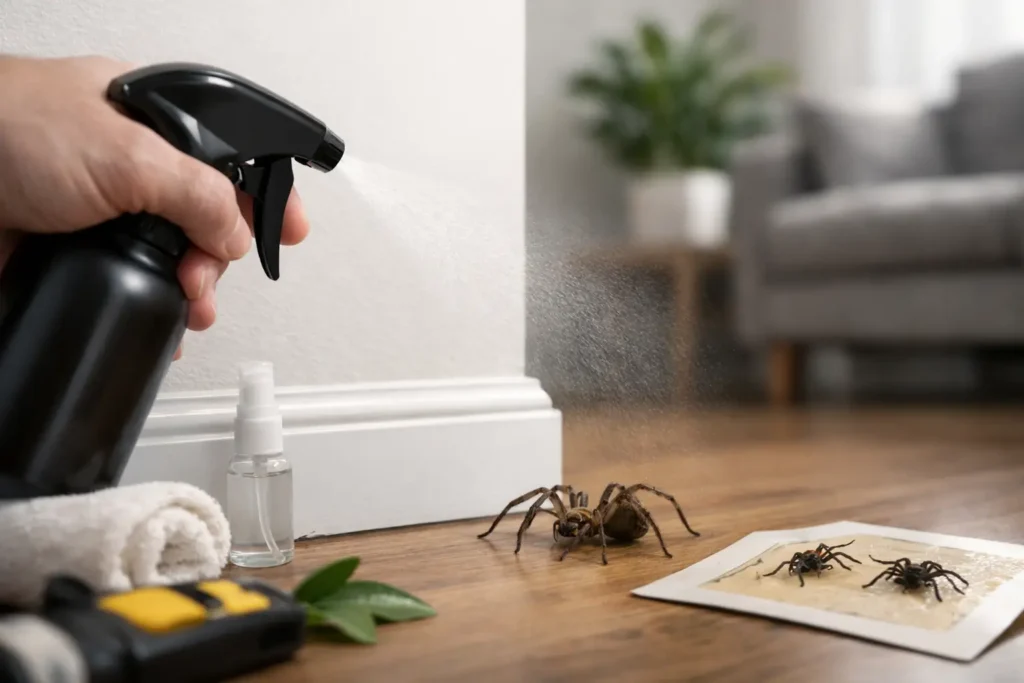
A spider in the corner of a basement or bathroom is often a sign that the space is offering something useful: quiet shelter, moisture, or a steady supply of small insects. Learning how to prevent spiders indoors starts with changing those conditions, not simply removing the spider you can see. For Maryland homeowners and small-business operators, the most dependable approach combines cleaning, exclusion, moisture management, and professional inspection when activity continues.
Spiders can enter through surprisingly small gaps around doors, windows, utility lines, and foundation openings. Once inside, they tend to settle in low-traffic areas such as basements, crawl spaces, garages, storage rooms, closets, and behind furniture. Most indoor spider concerns can be reduced with practical prevention, but repeated sightings may point to entry points or another insect issue that needs attention.
Why Spiders Come Inside
Spiders do not usually gather indoors because they are looking for people. They are looking for protected places to rest and, more importantly, prey. If gnats, flies, ants, roaches, or other small insects are present, spiders have a food source that can keep them nearby.
Seasonal changes can also increase sightings. During cooler weather, spiders may move toward warmer, more sheltered parts of a building. Heavy rain can push them away from outdoor hiding places, while hot, humid Maryland summers can make damp basements and shaded storage areas especially appealing.
A single spider does not automatically mean there is an infestation. Still, seeing spiders regularly in the same rooms, finding multiple webs, or noticing activity near windows and exterior doors is a reason to look closely at conditions inside and around the property.
How to Prevent Spiders Indoors With Exclusion
The best long-term spider prevention begins at the building exterior. A home or business can be clean indoors and still have spider activity if openings provide easy access. Walk the perimeter in daylight and look for gaps where siding meets foundations, where pipes and cables enter, and around door and window frames.
Install or replace worn door sweeps so exterior doors close tightly at the threshold. Repair torn window screens and make sure windows shut fully. Caulk small cracks around trim, utility penetrations, and foundation gaps. Larger openings may need appropriate sealing materials or professional exclusion work so the repair is durable and does not interfere with ventilation or building systems.
Pay attention to attached garages, basement doors, and exterior storage access. These areas are common transition points because they are opened often and may have less consistent weather sealing. A small gap under a garage door can give spiders and the insects they hunt a direct route indoors.
Exterior lighting deserves a closer look as well. Bright lights near doors attract flying insects after dark, and those insects can draw spiders to the building. If possible, use lighting positioned away from entry doors or choose warmer-toned outdoor bulbs. The goal is not to keep every insect away from the property, but to reduce insect activity immediately around common entry points.
Reduce the Food and Shelter Spiders Need
Spider control is closely tied to general insect prevention. When you reduce the pests that spiders feed on, the space becomes less attractive over time. Keep food in sealed containers, clean crumbs and spills promptly, and avoid leaving pet food out overnight when possible. In a small business, give special attention to break rooms, storage areas, trash handling spaces, and employee food areas.
Vacuuming is one of the simplest ways to interrupt spider activity. Use a vacuum attachment to remove webs, egg sacs, and spiders from ceiling corners, behind furniture, along baseboards, and around window frames. Dispose of the vacuum contents promptly in an outdoor trash container. Removing webs matters because an undisturbed web can signal that the area remains a suitable place to stay.
Clutter creates protected hiding areas. Cardboard boxes, stacked paper, unused equipment, and stored clothing can make basements, garages, and closets more inviting. Replace worn cardboard with sealed plastic bins where practical, keep stored items off the floor, and leave enough space between belongings and walls to inspect and clean.
Outside, keep mulch, leaves, firewood, and stored materials from resting directly against the foundation. Trim shrubs and vines so they do not touch siding, windows, or rooflines. These changes limit sheltered pathways that lead spiders and other insects closer to the structure.
Control Moisture in Basements and Other Quiet Areas
Damp spaces often support the insects that attract spiders. Check basements, crawl spaces, utility rooms, bathrooms, and under-sink cabinets for leaks, condensation, or standing water. Repair plumbing drips, improve drainage where needed, and use a properly sized dehumidifier in persistently damp areas.
Ventilation matters, particularly in bathrooms and laundry rooms. Run exhaust fans during and after showers, and make sure vents are working as intended. In a basement, monitor humidity instead of guessing. A consistently humid space may need a combination of dehumidification, drainage improvements, and targeted pest prevention.
Moisture control can also protect the property itself. Addressing a damp basement or leaking pipe is not just a spider-prevention task. It helps reduce the conditions that support a wider range of household pest problems.
Check the Places Spiders Commonly Hide
A regular inspection is more useful than waiting until webs become obvious. Look behind stored items, under shelving, around water heaters, in window wells, near floor drains, and along unfinished basement walls. In living areas, inspect behind curtains, beneath furniture, and in seldom-used closets.
Use care when moving items that have been stored for a long time, especially boxes, seasonal decorations, shoes, and gloves. Shake out or inspect these items before bringing them into frequently used rooms. This is particularly helpful in garages and sheds, where indoor and outdoor conditions overlap.
For businesses, assign routine checks to areas customers may not see but where pests can settle unnoticed. Delivery entrances, utility closets, stockrooms, and exterior waste areas should be part of a regular sanitation and maintenance routine.
When a Professional Spider Inspection Makes Sense
Home prevention is highly effective when the issue is occasional and entry points are easy to identify. It may not be enough when spiders keep returning despite cleaning and sealing, when webs appear in several areas, or when another insect population may be supporting the problem.
A trained technician can inspect likely entry points, identify conditions contributing to activity, and build a plan around the property rather than relying on a one-size-fits-all response. Treatment may be appropriate in certain areas, but lasting control also depends on exclusion, sanitation, monitoring, and addressing the insect activity that attracts spiders in the first place.
For families with children or pets, professional guidance can be especially reassuring. A licensed technician can recommend family-conscious methods that fit the layout of the home, the level of activity, and the areas where people and pets spend time. Q Pest Control provides customized prevention plans for homes and small businesses throughout the Baltimore metro area and surrounding central Maryland communities.
Keep Prevention Consistent Through the Year
Spider prevention works best as a routine, not a one-time project. Vacuum webs as part of regular cleaning, inspect door sweeps and screens with seasonal changes, keep storage organized, and respond quickly to moisture problems. After storms or major temperature shifts, check basements, garages, and exterior entry points for new activity.
If spider sightings become frequent, treat that pattern as useful information. It may reveal a gap that needs sealing, a moisture issue that has gone unnoticed, or an insect problem developing nearby. A clear inspection and prevention plan can help keep your home or business comfortable, protected, and easier to maintain all year long.