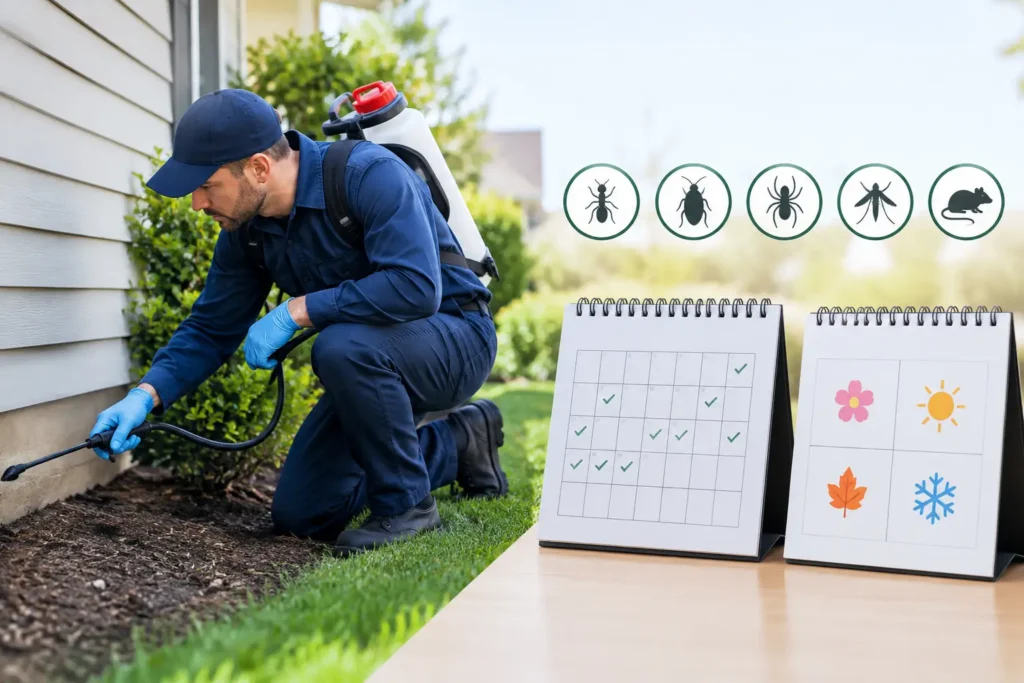
A pest problem rarely follows a convenient calendar. Ants can appear after a stretch of rain, roaches can multiply quickly near food and moisture, and rodents may seek indoor shelter as Maryland temperatures change. Choosing monthly versus quarterly pest service is not simply a matter of how often a technician visits. It is about matching the level of monitoring, treatment, inspection, and prevention to the conditions at your home or business.
For many properties, quarterly service provides dependable year-round prevention. Monthly service may be the better fit when pest activity is persistent, a property has higher exposure, or an active issue needs closer follow-up. A licensed technician can help determine the right schedule by looking beyond the pests you see and identifying the conditions that allow them to return.
What Quarterly Pest Service Is Designed to Do
Quarterly pest service means a technician visits approximately every three months to inspect the property, address seasonal pest pressures, and maintain a prevention plan. For homeowners who are not dealing with ongoing indoor activity, this schedule is often a practical way to stay ahead of common pests before they become established.
Each season brings a different concern in central Maryland. Spring can bring ants and other moisture-seeking insects. Summer may increase activity around entry points, patios, kitchens, and trash areas. Fall often sends rodents toward warmer indoor spaces. Winter visits can focus on monitoring, indoor conditions, and the gaps that could become future entry points.
A quarterly program is most effective when the home has no major unresolved infestation, sanitation and moisture concerns are under control, and exclusion work is maintained. During each visit, the technician can inspect likely access areas, look for fresh evidence of activity, and adjust the approach when conditions around the property have changed.
For a family home with typical pest pressure, quarterly visits offer a consistent rhythm without waiting for a visible problem. It is prevention with professional eyes on the property throughout the year.
When Monthly Service Makes More Sense
Monthly service provides more frequent inspection and follow-up. It is generally suited for homes or small businesses where pests are active, recurring, or especially difficult to manage because of the building layout, nearby conditions, food-handling needs, or a history of infestation.
For example, a roach issue may require closer monitoring because activity can continue in hidden areas even after the first treatment. A property with recurring ants may need repeated attention to locate contributing moisture or entry conditions. Rodent activity can also call for frequent checks of exclusion measures, monitoring devices, and newly discovered access points.
Small businesses may benefit from a monthly schedule when pest prevention directly affects sanitation, employee comfort, inventory, or customer confidence. Restaurants are not the only businesses with heightened needs. Offices with break rooms, retail spaces, multifamily properties, and facilities with frequent deliveries can all face conditions that make regular monitoring worthwhile.
Monthly service is not automatically better for every property. If pest pressure is low and the home is well sealed, visits every month may not be necessary. The right frequency should reflect what is happening at the property, not a one-size-fits-all schedule.
Monthly Versus Quarterly Pest Service: The Key Differences
The main difference is the amount of time between professional inspections. With monthly service, changes can be spotted and addressed sooner. With quarterly service, the plan is built around seasonal prevention and routine monitoring.
More frequent service can be valuable when a pest’s life cycle, an active infestation, or the property environment requires repeated attention. It gives the technician more opportunities to evaluate whether activity is declining, whether pests are using a new entry point, and whether the prevention plan needs adjustment.
Quarterly service works well when a property is stable and the focus is keeping it that way. It still includes professional expertise and preventive care, but it relies more heavily on the homeowner or business operator to report new concerns between scheduled visits.
Neither schedule replaces good property maintenance. Pest management works best when treatment is paired with inspection, exclusion, moisture control, and practical changes such as storing food properly, managing trash, and reducing clutter where pests can hide.
How Inspections and Exclusion Affect Your Service Schedule
Spraying alone is not a long-term pest plan. Pests enter through openings around utility lines, doors, windows, foundations, vents, and other vulnerable areas. They also stay where they can find food, water, warmth, and harborage.
That is why inspection and exclusion matter in both monthly and quarterly programs. A technician may identify a door sweep that needs attention, a gap around a pipe, a moisture issue near a sink, or signs that stored items are creating cover for pests. Correcting those conditions can reduce the need for more frequent visits over time.
For an active issue, monthly follow-up can help confirm that exclusion work is holding and that activity is truly decreasing. Once the problem is under control and the property is better protected, a quarterly schedule may be appropriate. In other situations, such as a business with continuous exposure, monthly monitoring may remain the right long-term choice.
Questions to Consider Before Choosing a Schedule
Start with the nature of the problem. Are you seeing one occasional pest, or are you noticing repeated activity in more than one room? Has the problem returned after prior treatment? Do you see evidence of rodents, roaches, ants, or other pests at particular times of year?
Next, consider the property itself. Older homes, homes with unfinished areas, properties near dense development, and buildings with numerous entry points may need closer attention. Moisture-prone basements, attached garages, shared walls, and frequent door traffic can also affect pest pressure.
Finally, consider who uses the space. Families with children and pets often want a preventive plan that supports a clean, comfortable home without waiting for a larger issue. Business owners need to think about daily operations, staff, visitors, sanitation routines, and how quickly a pest concern could disrupt the environment.
A professional inspection gives these questions useful context. Rather than guessing based on one sighting, you can make a decision based on evidence, pest behavior, and the conditions around your property.
What to Expect From a Customized Pest Plan
A dependable recurring plan should begin with an assessment, not an assumption. The technician should ask what you have seen, where activity is occurring, how long it has been happening, and whether there have been changes around the home or business. Inspection findings should guide the service schedule and the areas of focus.
The plan may include targeted treatment, monitoring, recommendations for sanitation or moisture correction, and exclusion work to reduce access. Family-safe methods and eco-friendly options may be appropriate depending on the pest, location, and level of activity. Clear communication matters as much as the service itself, especially when children, pets, employees, or customers use the space.
Q Pest Control Inc. brings more than 35 years of experience to this process, with licensed, state-certified technicians who tailor pest plans to the needs of central Maryland properties. The goal is not just to address what is active today, but to reduce the conditions that can lead to another problem tomorrow.
Choose the Frequency That Supports Prevention
Quarterly service is a strong preventive choice for many stable homes and businesses. Monthly service offers the closer attention that recurring activity, active infestations, and higher-exposure properties may require. A schedule can also change as conditions improve or new pest pressures emerge.
The most helpful next step is a thorough inspection and an honest conversation about what your property needs. When prevention, exclusion, and follow-up work together, pest control becomes a practical part of protecting the people and places that matter to you.