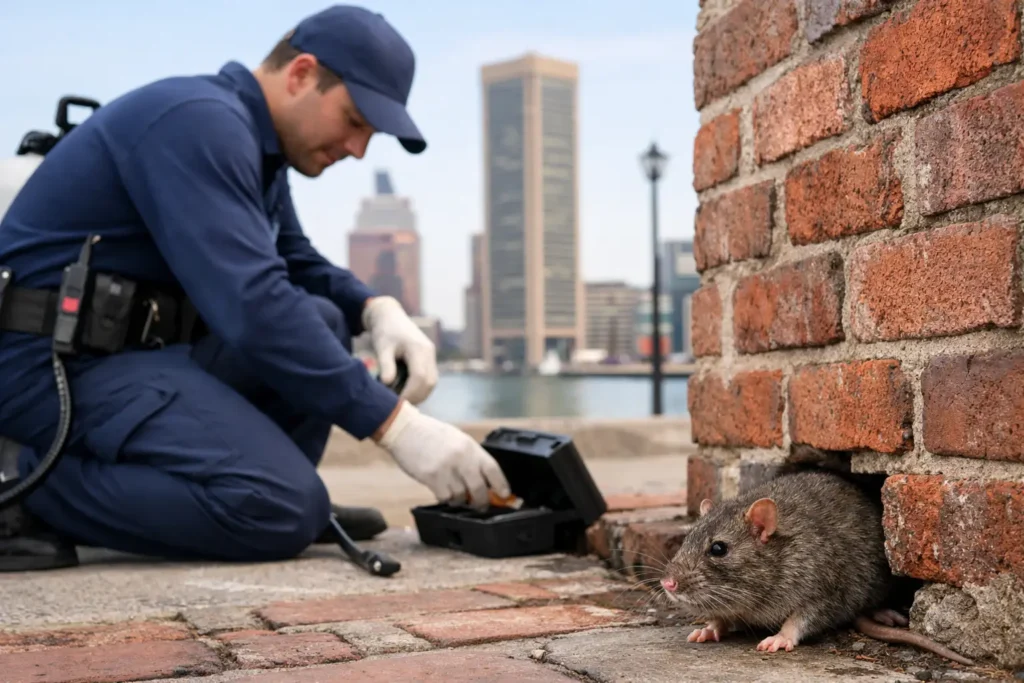
A rat sighting in a Baltimore basement, kitchen, utility room, or business storage area is rarely an isolated event. Rats stay close to shelter, food, and dependable access routes, often moving through wall voids, crawl spaces, attics, and areas homeowners cannot easily inspect. A Baltimore rat exterminator should do more than address what is visible. Lasting control requires finding where rats are active, reducing the conditions that support them, closing entry points, and confirming the problem has been resolved.
For families and small businesses, the goal is straightforward: restore a clean, safe environment without guessing at the source of the problem. A professional plan provides a clear path from the first inspection through follow-up monitoring, with treatment decisions tailored to the property and its occupants.
Why Rat Problems Need a Full Property Assessment
Rats are resourceful and cautious. They can enter through surprisingly small openings around pipes, utility lines, foundation gaps, garage doors, vents, and damaged exterior areas. Once indoors, they may travel quietly behind insulation, under cabinets, or along plumbing routes before anyone notices signs of activity.
That is why a thorough inspection comes first. A licensed technician looks for more than a rat itself. Droppings, gnaw marks, rub marks along travel paths, disturbed insulation, openings near the foundation, and damaged food packaging can all help identify the extent of activity. The inspection also helps distinguish between a recent issue and an established infestation that may require a more involved plan.
In Baltimore City and the surrounding metro area, property age and layout can affect the approach. Older rowhomes may have connected structural pathways and basement access points, while detached homes may have gaps near additions, decks, garages, or utility penetrations. A small business can face different concerns, such as receiving areas, storage rooms, floor drains, dumpsters, and customer-facing spaces. There is no one-size-fits-all solution because the access points and pressures are different at every property.
What a Baltimore Rat Exterminator Should Address
Effective rat control combines active removal with prevention. Focusing only on the immediate activity may provide short-term relief, but rats can return if the routes and conditions that allowed them in remain unchanged.
Targeted treatment based on activity
After identifying active areas, the technician can place appropriate control measures where rats are most likely to travel. Placement matters. Randomly setting traps in an open room often misses the protected routes rats prefer. Professional service focuses on known signs, concealed runways, and areas that can be managed responsibly around children, pets, employees, and customers.
The treatment plan should also account for the property type. A home with young children needs a different setup than a restaurant office, retail stockroom, or multi-unit building. Responsible pest management means addressing the urgency of the problem while keeping the environment and daily routines in mind.
Exclusion to stop new entry
Exclusion work is often the difference between temporary improvement and lasting control. This process identifies and seals practical entry points, such as gaps around pipes, openings at the foundation, damaged screens, spaces around utility connections, and worn door sweeps.
Not every opening can be handled in the same way. Some areas need durable sealing materials, while others may require repair by a qualified property professional. A pest management technician can identify likely access points and explain which corrections will have the greatest impact. The priority is to make the structure less accessible without overlooking the routes rats are already using.
Food and clutter adjustments
Sanitation supports control, but it is not about blaming the homeowner or business owner. Even well-kept properties can develop rat problems when an exterior gap or nearby activity creates an opening. Still, removing easy food sources makes the property less attractive and helps treatment work faster.
Keep food in secure containers, clean spills promptly, avoid leaving pet food out overnight, and make sure trash lids close fully. In garages, basements, and storage areas, reducing piled cardboard and unnecessary clutter makes inspections easier and removes hidden nesting opportunities. For small businesses, staff routines around waste, deliveries, and storage should support the prevention plan.
Follow-up monitoring
A rat problem should not be treated as finished the moment activity drops. Follow-up visits allow the technician to check control points, evaluate new signs, adjust the approach when needed, and confirm that exclusion measures are holding. This step is especially valuable in larger homes, properties with complex access areas, and businesses where consistent sanitation is essential.
Monitoring also creates a practical record of progress. Rather than relying on a single quiet night, property owners can make decisions based on evidence that activity has ended or that another area needs attention.
Signs You Should Call for Professional Help
One rat sighting is enough reason to investigate, especially if it occurs indoors. Other signs can include fresh droppings, scratching sounds in walls or ceilings, chewed wires or packaging, greasy marks near travel routes, and repeated activity near trash or food storage. A strong, persistent odor in a confined area may also point to an issue that needs prompt attention.
Some situations deserve faster action. Call for help when you see rats during daylight, find signs in a kitchen or pantry, notice damage to wiring, or manage a business where sanitation and customer confidence are at stake. Delaying service can give rats more time to establish protected nesting areas and damage parts of the property that are difficult to reach.
Homebuyers should also pay attention to evidence of rodent activity during the inspection process. A property can look well maintained while still having foundation gaps, attic concerns, or utility openings that need correction. Addressing those conditions early can prevent an unwelcome problem after move-in.
Why Do-It-Yourself Efforts Often Fall Short
A store-bought trap can be useful for a single, clearly located rat, but it does not replace a full inspection. The main trade-off with do-it-yourself efforts is that they tend to focus on the rat that was seen rather than the conditions that brought it inside. Without identifying the entry point, another rat may follow the same route.
Placement can also be challenging. Rats are wary of unfamiliar objects, and incorrect setup may produce little result. Inaccessible areas such as wall voids, crawl spaces, attics, and behind appliances require a careful approach. If traps are placed where children or pets can reach them, the risk of an unsafe situation increases.
Professional service is particularly helpful when activity continues after basic efforts, signs appear in multiple areas, or the source is not obvious. An experienced technician can assess the entire structure and build a plan that addresses active control, exclusion, and prevention together.
Protecting Baltimore Homes and Small Businesses Over Time
For properties with recurring rodent pressure, ongoing pest management can provide reassurance beyond a one-time visit. Seasonal changes, construction nearby, aging exterior materials, and shifting food sources can all change pest activity around a property. Regular inspections and monitoring make it easier to catch new concerns before they become a larger infestation.
Q Pest Control Inc. brings more than 35 years of experience to Maryland homes and small businesses, with licensed, state-certified technicians who tailor service to each property. The focus is practical and family-conscious: identify the issue, treat it responsibly, seal likely access points, and provide dependable follow-through.
A rat problem can feel unsettling, but it is manageable with a plan built around the property rather than a quick fix. If you have noticed signs of activity, acting early gives you the best chance to protect your home, your business environment, and the people who rely on both.