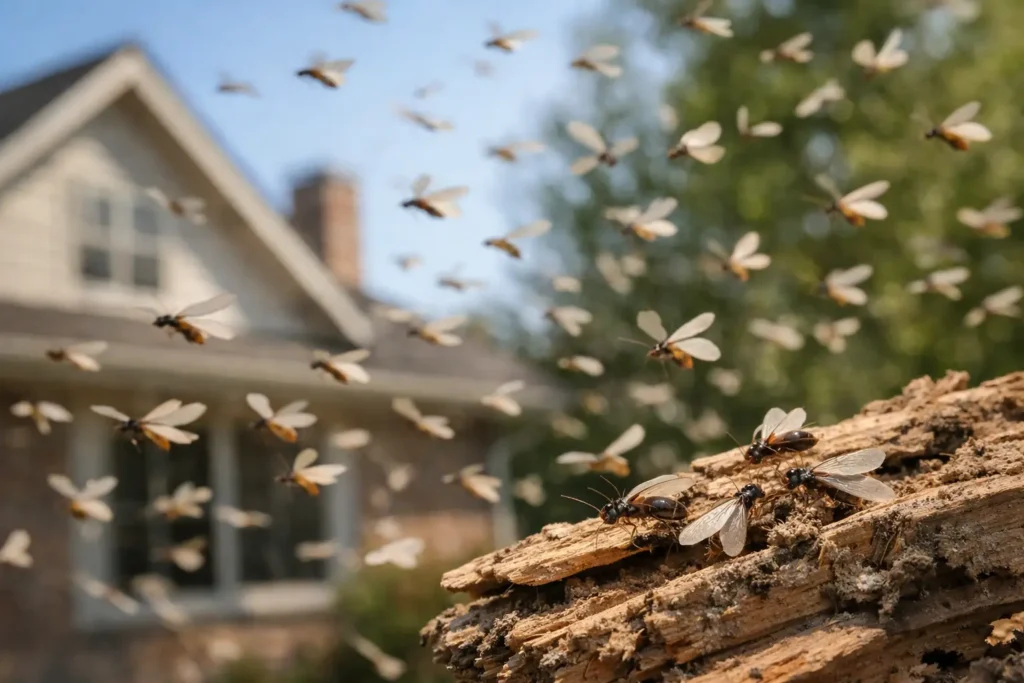
A sudden cluster of winged insects around a window, porch light, or interior sill can make any property owner uneasy. Termite swarms are one of the clearest signs that a mature termite colony may be active nearby, but they do not automatically prove that termites are feeding inside your home or business. The key is recognizing what you are seeing, preserving a sample if possible, and arranging a professional inspection before a small warning sign becomes a costly structural concern.
In central Maryland, swarming often happens when seasonal weather creates the right combination of warmth and moisture. Because the insects are brief visitors, many people clean them up and move on. That is understandable, but discarded wings, insects emerging indoors, or repeated activity around the building deserve prompt attention.
What Are Termite Swarms?
A termite swarm is the reproductive stage of a mature colony. Winged adult termites, sometimes called swarmers, leave their original colony to pair up and start new colonies. They are not the workers that cause damage inside wood. However, their appearance tells us that a mature colony has developed in the area.
Swarmers are most likely to appear in spring, especially after rain and during warmer days, though timing can vary with local weather and termite activity. They may gather near lights, windows, doors, or vents because they are drawn to light and can become trapped indoors.
Seeing a few swarmers outside does not necessarily mean the building is infested. A colony may be in the soil, a nearby tree stump, landscaping material, or another structure. Swarmers found inside are more concerning. They can indicate that termites are emerging from within wall voids, a basement area, crawl space, or another concealed part of the structure.
Termite Swarms vs. Flying Ants
Flying ants are frequently mistaken for termites, and the difference matters. Ants can be a nuisance, but termites are wood-destroying insects that require a different level of evaluation and control.
Termite swarmers have straight antennae, a broad waist, and two pairs of wings that are similar in size and shape. Flying ants have bent antennae, a noticeably pinched waist, and front wings that are longer than their rear wings. Termite wings also tend to shed easily. A pile of matching, translucent wings on a windowsill or floor is often a stronger clue than the insects themselves.
Identification can be difficult once insects are damaged or dried out. If you can safely collect several insects or wings in a small sealed container, a licensed technician can help determine what they are. Clear photos can also be useful, particularly if the insects have already disappeared.
Why Swarmers Deserve a Property Inspection
Termites work out of sight. They usually travel through protected spaces, including soil, foundation gaps, wood in contact with the ground, and hidden areas behind finishes. By the time visible damage appears, activity may have been present for some time.
A professional termite inspection looks beyond the room where swarmers appeared. The inspection may include accessible interior areas, the foundation perimeter, crawl spaces, basements, utility penetrations, attached structures, and conditions that make termite activity more likely. The goal is to determine whether there is evidence of current activity, past activity, conducive conditions, or a need for monitoring.
A thorough inspection is also valuable when no active termites are found. It can identify conditions that deserve correction, such as excess moisture near the foundation, soil or mulch piled against siding, wood debris near the building, or gaps around utility lines. Addressing those issues helps make the property less inviting to termites and other insects.
For homebuyers, termite concerns should not be left to guesswork. A Wood-Destroying Insect inspection provides professional documentation for a real-estate transaction and can reveal visible evidence that a general walk-through may miss.
What to Do When You See Swarmers
Start by noting where and when the swarm occurred. Were the insects indoors or outside? Did they appear near a specific window, wall, basement corner, or door? These details help guide an inspection.
Vacuuming up swarmers is fine for immediate cleanup, but try to save a few specimens or wings first. Avoid spraying the area before an inspection if you can. A visible trail, exit point, or insect sample can provide useful evidence for accurate identification.
Next, check for other warning signs without disturbing the area. Look for piles of shed wings, thin mud tubes along foundation walls or joists, soft or hollow-sounding wood, bubbling paint, or doors and windows that suddenly stick. None of these signs alone confirms the full extent of a problem, but they strengthen the case for a professional evaluation.
If swarmers came from inside the building, contact a qualified termite professional promptly. If they appeared outdoors only, an inspection is still a sensible precaution, especially if the property has never been evaluated for termites, has a history of activity, or is being prepared for sale.
Conditions That Can Increase Termite Risk
Termite prevention is not about making a property perfectly sealed or perfectly dry. Maryland homes and small businesses face changing weather, mature landscaping, and a mix of older and newer construction. The practical goal is to reduce easy access and conditions that support termite activity.
Keep water moving away from the foundation by maintaining gutters, downspouts, and drainage. Repair plumbing leaks and address damp crawl spaces or basement areas. Maintain a visible gap between soil or mulch and exterior siding, and avoid storing lumber, cardboard, or wood debris against the structure.
Exclusion work matters too. Small openings around pipes, utility lines, and foundation features can provide hidden routes for pests. Sealing appropriate entry points and correcting exterior conditions can support a long-term prevention plan, though exclusion alone cannot replace treatment when an active termite colony is confirmed.
How Professional Termite Control Protects the Property
Effective termite control begins with the right diagnosis. The best plan depends on the termite species, evidence of activity, construction type, access to affected areas, and conditions around the property. A one-size-fits-all approach can overlook the places termites use to reach a structure.
At Q Pest Control, licensed, state-certified technicians evaluate the property and explain the findings in clear terms. When treatment is needed, the plan is built around the structure and the evidence found, with responsible options that consider children, pets, and daily use of the space. Follow-up monitoring and prevention guidance help protect the property after initial activity has been addressed.
For small businesses, prompt attention is equally important. Swarmers near customer areas, storage spaces, offices, or entryways can raise concerns and interrupt normal operations. An inspection can clarify the source and provide a practical plan for protecting the building while maintaining a clean, professional environment.
Do Not Wait for Visible Damage
Termite swarms are brief, but the question they raise should not be ignored. Many swarmers survive only a short time after emerging, so their disappearance does not mean the underlying risk has disappeared as well. A nearby mature colony may still be active, and a new colony can be difficult to detect in its early stages.
A timely inspection gives you facts instead of assumptions. Whether the result is reassurance, prevention recommendations, or a targeted termite-control plan, you will know what the property needs to stay protected. If you find wings on an interior sill or see insects emerging indoors, save what you can, make note of the location, and have a trusted local professional take a closer look.