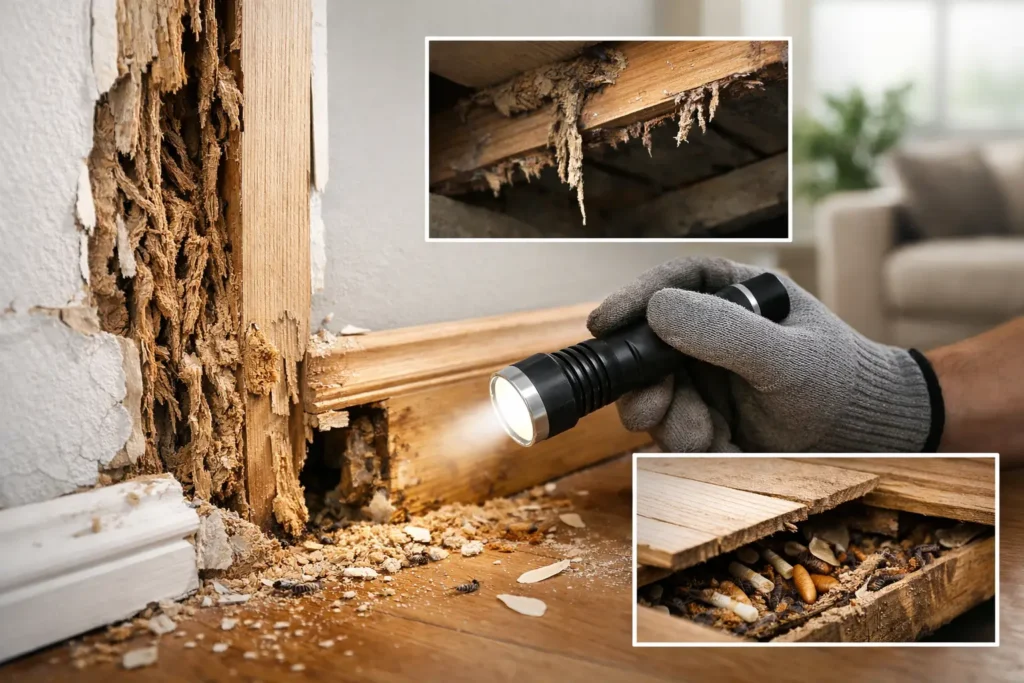
A baseboard that suddenly feels soft, a door that will not close correctly, or a faint pile of what looks like sawdust can be more than an ordinary home repair. These are possible signs of hidden termite damage, and they deserve attention before the problem spreads behind walls, beneath floors, or around structural wood.
Termites are difficult to spot because they often feed out of sight. By the time visible damage appears, activity may have been present for some time. For Maryland homeowners and small-business owners, a prompt professional inspection can clarify what is happening and help protect the structure before damage becomes more extensive.
Why Termite Damage Can Stay Hidden
Subterranean termites, the most common type found in this region, need moisture and protection from open air. They commonly travel through soil, foundation cracks, voids around plumbing, crawl spaces, and concealed areas of a building. Rather than leaving obvious holes right away, they may feed inside wood and leave a thin outer layer intact.
That means a wall, trim board, floor, or door frame can look normal at first glance while the wood beneath the surface has been weakened. Termite damage is also easy to mistake for moisture damage, normal settling, or an aging-home issue. A trained inspection is the best way to distinguish between these concerns.
7 Signs of Hidden Termite Damage to Watch For
1. Hollow-Sounding or Soft Wood
Wood that sounds hollow when lightly tapped can be a warning sign. Termites consume wood from the inside, often following the grain and leaving a paper-thin surface behind. You may notice this around baseboards, window trim, door frames, floor joists, or exposed wood in a basement or crawl space.
Do not rely on tapping alone. Wood can sound different because of how it was installed, and water damage can also cause soft spots. Still, hollow or weakened wood should be inspected, especially when it appears alongside other termite indicators.
2. Doors and Windows That Suddenly Stick
A door that drags, a window that becomes hard to open, or trim that seems slightly misaligned may point to a moisture issue or normal seasonal movement. It can also occur when termite activity affects the wood around frames.
Termites bring moisture into the areas where they feed, and damaged wood may swell or shift. If a sticking door or window is new, persistent, and accompanied by bubbling paint, soft trim, or visible cracking, it is worth having the area checked rather than simply sanding the frame or forcing it shut.
3. Blistering Paint or Uneven Wall Surfaces
Paint that bubbles, peels, or looks water-stained can lead homeowners to suspect a leak. That is a reasonable first thought, but termites can create a similar appearance when they feed just below a painted surface. Their activity can affect moisture levels and leave walls or trim looking uneven.
Look closely at areas near baseboards, window sills, exterior doors, and garages. A small blister in paint is not automatic proof of termites. But when the surface feels soft or thin, or when nearby wood shows other damage, it needs professional attention.
4. Mud Tubes Along Foundations or Walls
Mud tubes are one of the clearest visible signs of subterranean termite activity. These narrow, soil-colored tunnels may appear along foundation walls, crawl space supports, basement walls, utility lines, or other surfaces connecting the ground to wood.
The tubes protect termites as they travel between their colony and a food source. Some may be old and inactive, while others are currently in use. Breaking one open is not a reliable way to determine whether the problem is over, because termites can rebuild tubes or travel through another concealed route. An inspection can identify whether there is active activity and where it is coming from.
5. Small Piles of Wings Near Windows or Doors
Winged termites, often called swarmers, emerge when a colony is mature enough to reproduce. After a flight, they shed their wings. Finding several matching, translucent wings near a window, exterior door, light fixture, or sill may signal termite activity nearby.
Swarmers are sometimes confused with flying ants. Termites have straight antennae, a more uniform body shape, and four wings of similar length. Flying ants have bent antennae, a noticeably narrow waist, and front wings that are longer than their back wings. If you are unsure which insect you found, save a sample or take a clear photo for a pest professional.
6. Frass or Fine Wood-Colored Debris
Drywood termites produce pellet-like droppings known as frass. Although subterranean termites are more typical in central Maryland, any unexplained wood-colored debris near trim, wood fixtures, or small holes should be evaluated.
The material may resemble coarse sawdust, pepper-like grains, or tiny pellets. Do not assume it came from termites, since carpenter ants and ordinary wood damage can leave debris as well. The location, shape, texture, and nearby conditions all matter when determining the cause.
7. Sagging Floors, Loose Tiles, or Damaged Trim
More advanced hidden termite damage can affect how parts of a building feel and function. Floors may seem uneven or softer than usual, tiles can loosen as the subfloor changes, and baseboards or trim may crack, separate, or become easy to dent.
These signs can have other causes, including moisture intrusion and foundation movement. The concern rises when changes develop in a localized area, worsen over time, or occur near an exterior wall, plumbing opening, basement, crawl space, or prior wood damage. Avoid pulling up flooring or opening walls without a plan. A targeted inspection helps locate the source while limiting unnecessary disruption.
Where to Check First Around a Maryland Property
Termites are drawn to conditions that provide wood, moisture, and protected entry points. Start with the lower levels of the property. In a home, inspect visible foundation areas, basement walls, sill plates, crawl spaces, utility penetrations, porch supports, deck connections, and the lower portions of exterior trim.
Inside, pay attention to window and door frames, baseboards, areas around plumbing, laundry rooms, garages, and rooms where moisture has been an issue. Keep firewood, lumber, and other wood materials away from the foundation when possible. Make sure gutters direct water away from the building and address leaks or drainage concerns promptly.
For small businesses, termite concerns may be overlooked in storage rooms, utility areas, rear entrances, and low-traffic sections of the building. Regular inspections are useful because employees may notice a change in a door, wall, or floor without recognizing it as a potential pest issue.
What to Do If You Suspect Termites
First, do not panic and do not cover up the evidence. Take note of where you saw wings, tubes, damaged wood, or debris. If possible, photograph the area and avoid disturbing it. Moving soil, patching damaged trim, or applying a store-bought product can make a later inspection more difficult without solving the source of the activity.
Next, arrange a professional termite inspection. A licensed technician can assess accessible areas, look for current and previous activity, identify contributing conditions, and explain whether treatment, monitoring, exclusion work, repairs, or a combination of steps is appropriate. The right plan depends on the structure, the extent of activity, moisture conditions, and the termite species involved.
Homebuyers and sellers should be especially careful not to overlook suspected termite evidence. A wood-destroying insect inspection provides professional documentation for a real-estate transaction and can identify concerns that may not be visible during a general walkthrough.
Protect the Property Before Damage Grows
Termite activity rarely announces itself with one dramatic event. More often, it appears as a small change in wood, paint, flooring, or a doorway that does not seem quite right. Taking those changes seriously can prevent a manageable concern from becoming a larger structural repair.
For homeowners and businesses across the Baltimore area, Q Pest Control provides inspections and customized termite solutions built around careful evaluation, responsible treatment choices, and follow-up protection. When you notice a possible warning sign, a timely inspection gives you clear answers and a practical path forward.