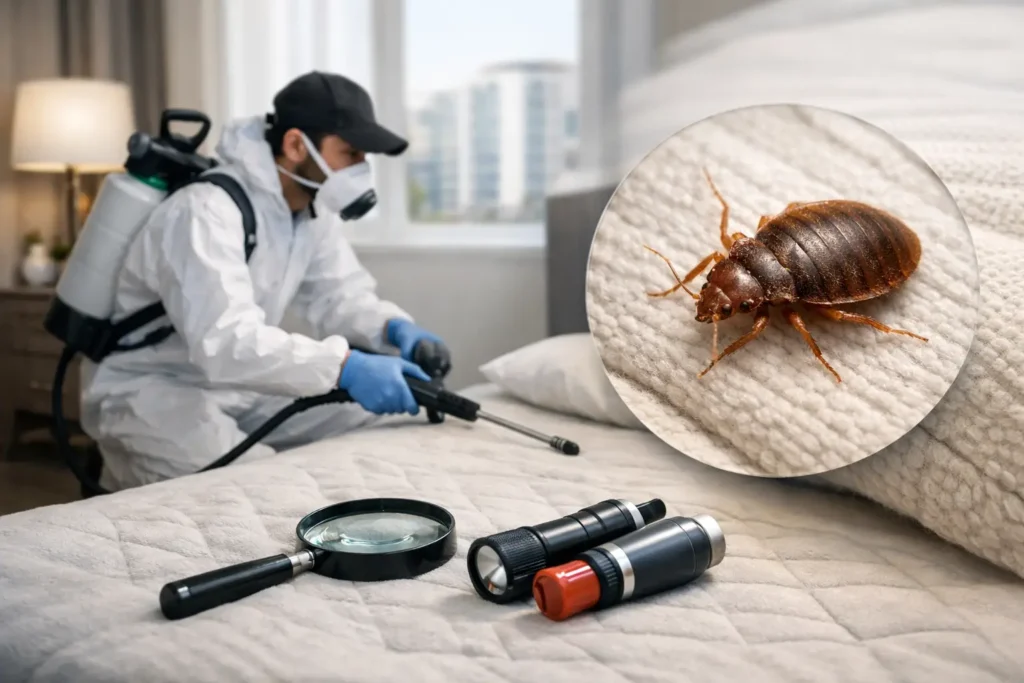
A bed bug sighting in an apartment can feel overwhelming because the problem may not be limited to one room – or even one unit. Effective bed bug treatment for apartments requires more than a quick spray or a new mattress cover. It requires a careful inspection, cooperation between residents and property management, targeted treatment, and follow-up monitoring to help stop the infestation from spreading or returning.
Bed bugs are excellent hitchhikers. They can arrive in luggage, used furniture, moving boxes, laundry, or personal belongings. Their presence is not a sign that a home is unclean. In multi-unit housing, however, their ability to move through wall openings, utility lines, hallways, and shared spaces makes a coordinated response especially important.
Why Apartment Bed Bug Problems Need a Different Approach
In a single-family home, treatment can focus on the affected rooms and the way residents use the space. Apartments add another layer: nearby units may need to be considered, particularly those directly beside, above, or below the affected apartment. Treating only the unit where bed bugs were first reported can leave an active source nearby.
A professional inspection helps determine the extent of the issue. A licensed technician looks beyond the mattress and box spring, checking bed frames, upholstered furniture, baseboards, curtains, nightstands, cracks around trim, and other common hiding areas. In apartments, the inspection may also identify gaps around pipes, outlets, and shared walls that should be addressed as part of a prevention plan.
The goal is not simply to eliminate the bed bugs that are visible. It is to locate the places where they are hiding, account for their life cycle, and create a treatment plan that fits the unit, the building, and the household.
What Professional Bed Bug Treatment for Apartments Includes
A reliable plan begins with clear communication. Residents should know what to prepare, what areas will be treated, how long the process may take, and what follow-up steps are necessary. Property owners and managers need timely documentation and a practical path for protecting other residents.
Inspection and identification
Bed bug bites alone are not enough to confirm an infestation. Skin reactions vary widely, and other pests or conditions can cause similar marks. A professional inspection looks for physical evidence such as live bugs, shed skins, eggs, dark spotting, and small pale stains around sleeping and resting areas.
Correct identification matters. It prevents unnecessary treatment and allows the technician to focus on the pest problem actually present.
Customized, targeted service
There is no one-size-fits-all apartment treatment. The right method depends on the severity of the infestation, the size and layout of the unit, the furniture present, and whether nearby units show signs of activity. A trained technician may use a combination of carefully selected treatment methods, detailed crack-and-crevice work, and physical controls designed for the specific conditions found during inspection.
Family-safe practices are central to a responsible plan. Residents receive preparation and re-entry instructions that help protect children, pets, and household belongings while allowing treatment to work as intended.
Follow-up visits and monitoring
Bed bug eggs can hatch after an initial service, which is why follow-up is not an optional extra. Return inspections and monitoring help confirm that activity has stopped and allow the technician to address any newly emerged bed bugs before they become an established problem again.
The timing and number of follow-up visits depend on the findings. A light, contained issue may need a different schedule than an infestation that has been present for some time or involves several connected units.
Preparation Makes Treatment More Effective
Preparation is one of the most important parts of bed bug control. It gives the technician access to hiding places and reduces the chance that bed bugs will be carried to other rooms or units. Residents should always follow the specific instructions provided for their apartment, since preparation needs can vary.
In most cases, clothing, bedding, and washable fabrics should be handled carefully and kept contained after laundering and drying as instructed. Clean items should be stored in sealed bags or bins until the treatment process is complete. Clutter around beds, sofas, and walls should be reduced so technicians can inspect and treat the areas where bed bugs are most likely to hide.
Avoid moving furniture, bedding, or belongings into common areas, another apartment, or a friend’s home. That can spread bed bugs and make the problem harder to manage. It is also best not to discard furniture without direction from property management or a pest professional. A discarded item can expose others, and replacing furniture before the infestation is resolved can create more places for bed bugs to hide.
Residents should continue sleeping in their usual sleeping area unless they receive different instructions. Moving to a couch or another room may cause bed bugs to follow and expand the infestation within the unit.
Responsibilities for Renters, Owners, and Managers
Fast reporting is one of the strongest defenses against a larger building-wide problem. Renters should notify the property owner or manager as soon as they notice possible signs of bed bugs. Include useful details, such as where activity was observed, when bites or signs began, and whether used furniture, recent travel, or visitors may have introduced a risk.
Owners and managers should respond promptly with a professional inspection and clear written guidance. They also need to consider whether adjacent units should be inspected. Communication should be respectful and discreet. Bed bug concerns can be stressful, and residents are more likely to cooperate fully when they receive practical instructions without blame.
For small apartment buildings, a coordinated plan may involve scheduled access to multiple units, monitoring in shared areas where appropriate, and repair of gaps that provide pathways between apartments. In larger communities, consistency is equally valuable: residents should know how to report concerns, what happens after a report, and why preparation and follow-up matter.
How to Prevent Bed Bugs From Returning
No prevention step can guarantee that bed bugs will never enter an apartment. People can unknowingly bring them home from travel, workplaces, schools, public transportation, or secondhand items. Still, a few consistent habits can reduce the risk of a small introduction becoming a major infestation.
Inspect secondhand furniture carefully before bringing it indoors, especially mattresses, bed frames, upholstered chairs, and couches. When returning from travel, keep luggage off beds and upholstered furniture, then inspect and handle clothing promptly. In shared laundry spaces, transport items in closed bags and avoid placing clean laundry directly on folding tables if possible.
Apartment owners should also maintain the building itself. Sealing gaps around utility penetrations, repairing loose trim, and addressing openings around baseboards can reduce travel routes between units. These repairs do not replace professional treatment, but they support long-term prevention and improve the overall condition of the property.
When to Call for Help
Call for a professional inspection when you find a suspected bed bug, see spotting near a mattress or headboard, notice repeated unexplained bites after sleeping, or learn that a nearby unit has confirmed activity. Waiting can allow a small issue to spread through furniture, belongings, and adjoining apartments.
Q Pest Control brings more than 35 years of experience to bed bug concerns across the Baltimore metro area and surrounding central Maryland communities. Our licensed, state-certified technicians develop a clear treatment and follow-up plan based on the apartment, the household, and the level of activity found.
A prompt report, a thorough inspection, and steady follow-through can turn a stressful apartment bed bug problem into a manageable one – while helping protect the people, pets, and homes connected to it.