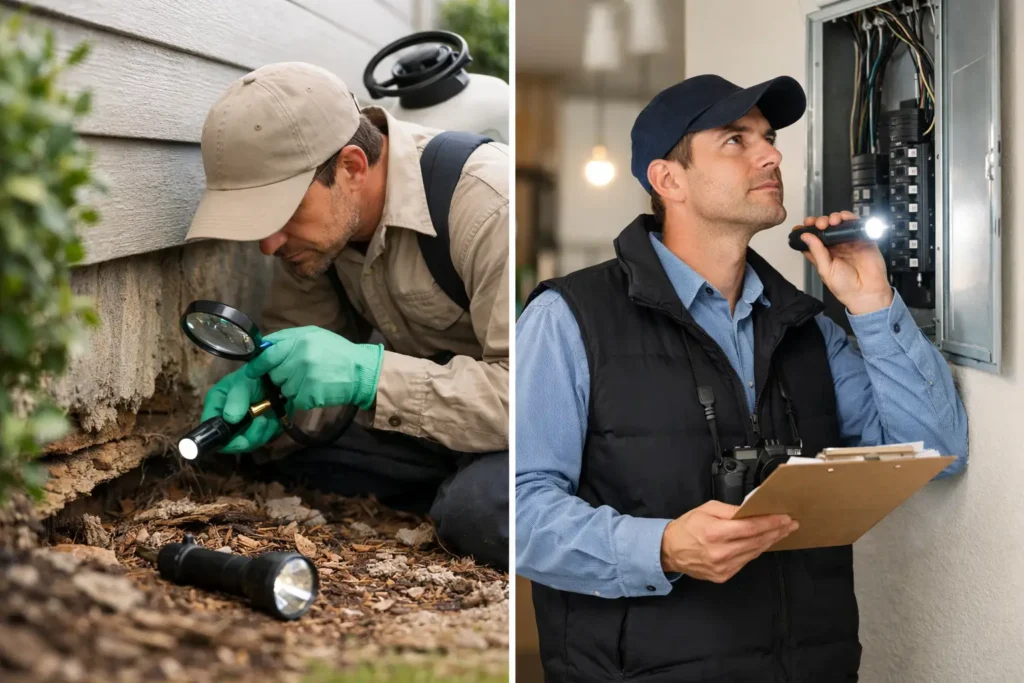
A basement support post with faint mud tubes, a pile of sawdust near a window frame, or old insect damage in a crawl space can change the conversation around a home purchase quickly. That is why understanding WDI inspection versus home inspection matters before you reach the closing table. These inspections may happen around the same time, but they answer different questions and should not be treated as interchangeable.
For Maryland homebuyers, sellers, and real-estate professionals, the practical answer is often simple: a home inspection gives you a broad look at the property, while a WDI inspection focuses specifically on evidence of wood-destroying insects and the conditions that can support them. One inspection cannot replace the other.
What Is a Home Inspection?
A home inspection is a general evaluation of a property’s visible and accessible systems and components. It is designed to help a buyer understand the home’s overall condition before moving forward with a purchase.
Depending on the inspector and the scope of the inspection, a home inspection may review the roof, exterior surfaces, foundation, attic, plumbing, electrical components, heating and cooling equipment, windows, doors, and major interior features. The inspector is looking for observable concerns, maintenance needs, safety issues, and signs that a system may need further evaluation.
A quality home inspection can identify signs that deserve attention, such as moisture near a foundation, damaged trim, soft flooring, or cracks in structural materials. It may also note possible insect activity when it is visible. However, a home inspector is not necessarily performing a formal inspection for wood-destroying insects or completing the documentation a lender or real-estate transaction requires.
That distinction matters. A home inspection is broad by design. It gives you a useful picture of the house, but it does not provide the specialized pest assessment that a WDI inspection is intended to deliver.
WDI Inspection Versus Home Inspection: The Core Difference
A WDI inspection is a focused inspection for wood-destroying insects. WDI stands for wood-destroying insects, a group that can include termites, carpenter ants, carpenter bees, and wood-boring beetles. The inspection is performed by a qualified pest professional who looks for visible evidence of current activity, prior damage, and conditions that may contribute to future problems.
The emphasis is not on every system in the home. It is on the areas where wood-destroying insects are most likely to be found or leave evidence behind. That can include basements, crawl spaces, garages, attached decks, porches, window frames, sill plates, utility entry points, and accessible structural wood.
During a WDI inspection, the technician may look for termite tubes, damaged or hollow-sounding wood, insect exit holes, frass, active insects, moisture concerns, earth-to-wood contact, and other visible signs that deserve documentation. The exact findings depend on what is accessible on the day of the inspection.
A WDI report is also commonly used in real-estate transactions. Some lenders, buyers, sellers, and closing professionals request it because wood-destroying insect activity can affect a property’s condition and future repair needs. Requirements vary by loan type and transaction, so it is wise to confirm what documentation is needed early in the process.
Why You May Need Both Inspections
Think of the two inspections as complementary. The home inspection evaluates the home as a whole. The WDI inspection examines a specific category of risks that can be easy to miss without pest-focused training and inspection methods.
For example, a home inspector may find moisture in a crawl space and recommend correcting the source. A WDI inspector may connect that moisture to conditions that make the area more favorable for termite activity. Neither finding makes the other unnecessary. Together, they give the buyer a clearer understanding of what needs attention.
The same is true when old insect damage is discovered. A home inspection may identify damaged wood as a concern, while a WDI inspection can help determine whether there is visible evidence of active wood-destroying insects, previous activity, or conditions that should be corrected to reduce the chance of another problem.
A buyer should be cautious about relying on a general inspection comment alone when a formal WDI report is requested. Likewise, a clear WDI report does not tell you whether the roof, electrical panel, furnace, or plumbing system is in good working order. Each inspection has a different purpose.
A WDI Inspection Is Not a Structural Engineering Review
A WDI inspection can identify visible insect damage, but it does not determine the full structural strength of affected wood or calculate what repairs may be needed. If significant damage is found, additional evaluation by the appropriate qualified professional may be recommended.
This is especially relevant in older Maryland homes, where years of moisture exposure, renovations, and prior repairs can make it difficult to tell the full history from a visual inspection alone. The best next step depends on the location and extent of the concern.
A Home Inspection Is Not a Pest Clearance
A home inspection report may mention no visible pest activity, but that statement is not the same as a dedicated WDI inspection report. Wood-destroying insects can remain hidden behind finished walls, beneath insulation, inside inaccessible areas, or in wood that cannot be fully examined without invasive work.
No visual inspection can guarantee that every hidden condition will be discovered. What a thorough WDI inspection does provide is professional documentation of visible evidence and accessible conditions at the time of service, along with clear recommendations when concerns are found.
What Happens if a WDI Inspection Finds Evidence?
Finding evidence does not automatically mean a sale cannot move forward. It means the buyer, seller, and their real-estate professionals have information to address. The right response depends on whether the evidence appears active, old, limited, widespread, or connected to moisture and access issues around the property.
If active termite activity or another wood-destroying insect concern is found, prompt treatment and follow-up are usually the priority. If the inspection shows a condition such as wood-to-soil contact, excess moisture, or an opening around a utility line, correcting that condition can be just as important as addressing the immediate pest issue. Prevention works best when the property is made less inviting to pests.
In some cases, the report may show evidence of prior activity with no visible signs of current insects. That still deserves a careful conversation. Old damage may require repair, and the conditions that allowed the issue to develop should be reviewed. A licensed technician can explain what was observed, what could not be accessed, and what practical next steps make sense.
How to Prepare for a WDI Inspection
A smooth inspection starts with access. If you are the seller or current homeowner, make sure the technician can reach the basement, crawl space entrance, garage, utility areas, and accessible attic spaces. Move stored items away from foundation walls where possible, and clear access to areas with visible staining or past damage.
It also helps to share relevant information. Let the technician know about prior termite service, past repairs to structural wood, recurring moisture, recent renovations, or areas where you have noticed insects. Documentation from prior work can provide helpful context, though the inspection still focuses on current visible conditions.
For buyers, schedule the WDI inspection early enough to receive the report, ask questions, and respond to any findings before deadlines approach. Waiting until the last moment can create unnecessary stress when a concern needs additional review or treatment.
Choosing a Pest Professional for a Real-Estate Inspection
A real-estate WDI inspection calls for more than a quick look around the exterior. You need a licensed, state-certified technician who understands where wood-destroying insects commonly leave evidence, how moisture and construction details influence risk, and how to document findings clearly.
At Q Pest Control Inc., our family-owned team brings more than 35 years of pest-management experience to WDI inspections across the Baltimore metro area and surrounding central Maryland communities. We focus on clear findings, practical recommendations, and responsible solutions that help protect the home, the people living in it, and the transaction moving forward.
If you are buying or selling a home, treat the WDI inspection as a chance to understand the property better, not simply another box to check. Clear information early gives you more time to make sound decisions and protect the home for the years ahead.