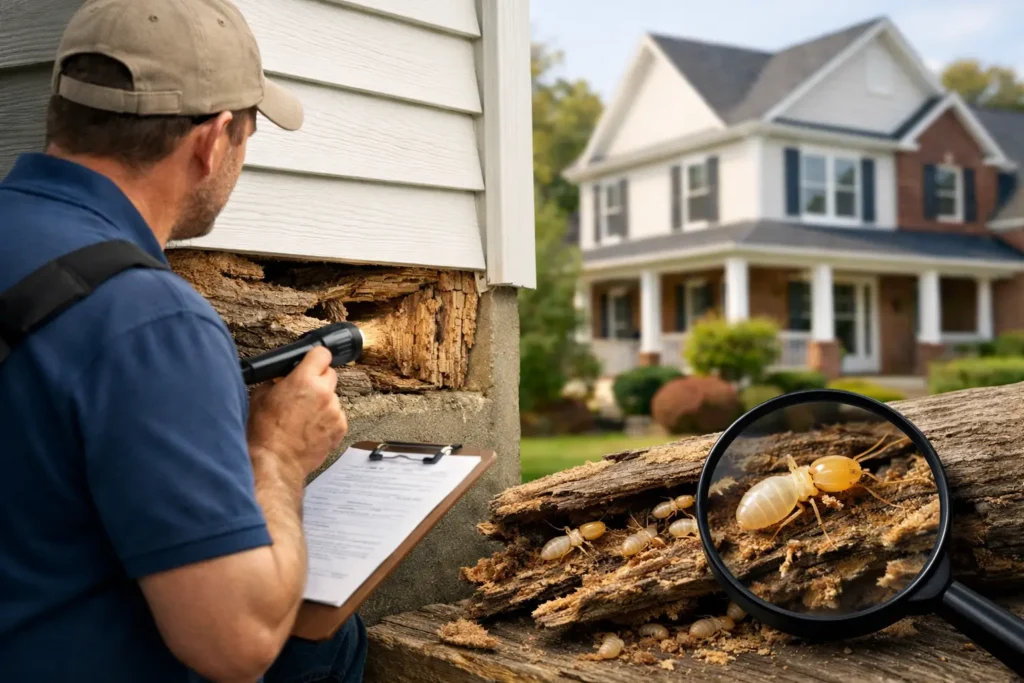
A home can look move-in ready and still have a history of termite activity behind a finished basement wall, beneath a deck, or along a concealed sill plate. That is why Maryland WDI inspection requirements matter during many real-estate transactions. A qualified inspection gives buyers, sellers, lenders, and real-estate professionals a documented view of wood-destroying insect activity and visible damage before closing.
A WDI inspection is not the same as a general home inspection. It is a focused evaluation for insects that can damage structural wood. The report can shape repair discussions, loan approval steps, and a buyer’s decision about how to move forward with confidence.
What Is a WDI Inspection?
WDI stands for wood-destroying insects. In Maryland, a WDI inspection is commonly requested when a property is being bought, sold, refinanced, or evaluated for possible insect-related damage. The inspection is performed by a properly licensed pest management professional and documented on the applicable Maryland wood-destroying insect inspection report.
The inspector looks for evidence of active infestation, prior activity, visible damage, and conditions that could make the property more inviting to these pests. The main insects addressed typically include termites, carpenter ants, carpenter bees, and wood-boring beetles such as powderpost beetles.
Termites receive the most attention because they can cause significant hidden damage over time. However, a complete WDI inspection should not treat every wood concern as a termite concern. Different insects leave different evidence, and identifying the source correctly helps everyone understand what treatment, repair, or prevention may be appropriate.
When Are Maryland WDI Inspections Required?
Maryland law does not make a WDI inspection automatic for every home sale. Whether one is required often depends on the purchase contract, the lender, the type of financing, or a buyer’s due-diligence decision.
Many lenders require a clear WDI report before they will finalize a loan, particularly when the property has signs of prior termite work, visible wood damage, or a history that raises questions. Government-backed loan programs may also have their own property-condition requirements. Buyers should confirm their lender’s expectations early, rather than waiting until the final days before settlement.
Even when no lender or contract requires it, a WDI inspection is a practical safeguard. Central Maryland homes face changing moisture conditions, mature landscaping, crawl spaces, older construction, and wood features close to soil. Those factors do not mean a home has an infestation. They do mean a professional inspection can reveal concerns that are easy to miss during a walkthrough.
For sellers, ordering an inspection before listing can prevent surprises after a buyer has already made an offer. If a concern is found, the seller has time to understand the issue, address active activity if needed, and provide clearer information during negotiations.
Who Can Perform the Inspection?
A WDI report for a Maryland real-estate transaction should be completed by a pest management professional who is properly licensed and state-certified to perform this work. This is more than a quick visual opinion from a contractor, homeowner, or general inspector.
A trained technician knows how to recognize the distinctions between active termite tubes, old evidence, carpenter-ant galleries, beetle exit holes, moisture damage, and non-insect wood deterioration. That distinction matters. A report that simply labels every damaged board as active termite damage can create unnecessary concern. On the other hand, overlooking current activity can leave a buyer with an expensive problem after closing.
At Q Pest Control, licensed technicians use their local experience to inspect homes throughout the Baltimore metro area and surrounding communities with careful attention to both immediate findings and conditions that may support future pest activity.
What Inspectors Look for During a WDI Inspection
The inspection generally covers accessible areas of the structure where wood-destroying insects may be active or where their evidence may appear. This often includes the basement, crawl space, garage, utility areas, foundation perimeter, porch structures, decks, accessible attic areas, and visible framing.
Inspectors look for signs such as mud tubes along foundation walls, damaged or hollow-sounding wood, insect exit holes, sawdust-like material, discarded wings, live insects, and prior treatment evidence. They also watch for moisture conditions, wood-to-soil contact, leaking plumbing, poor drainage, and dense vegetation against the structure. These conditions do not prove an infestation, but they can increase risk and deserve attention.
Accessibility affects the scope of any inspection. Stored belongings, finished walls, insulation, floor coverings, locked rooms, low-clearance crawl spaces, and unsafe areas can prevent a technician from seeing every portion of a structure. A WDI inspection is a careful professional assessment of visible and accessible areas, not a promise that no concealed issue exists anywhere in the home.
Active Activity, Previous Activity, and Damage
The language on a WDI report is especially important during a real-estate transaction. Active activity means the inspector found current evidence that insects are present or recently active. This may call for prompt treatment and, depending on the finding, a follow-up evaluation.
Previous activity means the inspector found evidence of an earlier issue, such as old termite tubes, repaired wood, or signs of past treatment, without clear evidence that insects are currently active. Previous activity is not automatically a deal-breaker. It does, however, warrant a closer look at records, repairs, moisture control, and ongoing prevention.
Visible damage may be reported when it appears related to wood-destroying insects. Pest management professionals can identify insect evidence, but determining the full structural significance of damaged wood may require evaluation by a qualified construction professional. Buyers should not assume that a pest report alone answers every repair question.
What the Maryland WDI Report Should Communicate
A properly completed report should identify the property, date of inspection, areas inspected, limitations or inaccessible areas, and the inspector’s findings. It should clearly state whether evidence of wood-destroying insects was found and describe relevant observations.
If treatment is recommended, the report or accompanying documentation should explain the basis for that recommendation. If the concern is old evidence rather than active infestation, that distinction should be clear. Straightforward documentation gives buyers and sellers a better foundation for decisions than vague language or verbal assurances.
It is also wise to review the report promptly. Real-estate timelines can move quickly, and questions are easier to resolve while the inspection period is still open. If a report notes inaccessible areas, ask why they could not be viewed and whether access can be provided for a return inspection.
Preparing a Property for a WDI Inspection
A few simple steps can help the inspection be more complete. Homeowners should provide access to the basement, crawl-space entry, garage, attic hatch, utility rooms, and any areas where prior pest work was completed. Move stored items away from foundation walls when possible, and make sure gates, sheds, and exterior features can be accessed.
If there are records of prior termite treatments, repairs, moisture work, or past WDI reports, have them available. These records do not replace the current inspection, but they can help clarify whether old evidence was previously addressed.
Do not cover, scrape away, or repair suspicious evidence before the inspector arrives. A fresh coat of paint or a newly concealed section of wood can make it harder to determine what occurred and whether further evaluation is needed.
What Happens If the Report Finds a Problem?
A finding does not automatically stop a sale. The next step depends on the type of insect, whether activity appears current, the extent of visible concerns, financing requirements, and the agreement between buyer and seller.
For active activity, the property may need treatment before closing or under terms set by the parties involved. For visible damage, a buyer may request further evaluation to understand repair needs. For conducive conditions, the solution may be as practical as correcting drainage, reducing wood-to-soil contact, repairing moisture sources, or improving exclusion around vulnerable areas.
The best response is specific to the home. A clear inspection, an honest explanation of findings, and a practical prevention plan can keep a manageable pest concern from becoming a last-minute closing surprise.
A WDI inspection gives a Maryland property transaction a clearer starting point: not a guarantee against every hidden issue, but professional documentation that helps protect the home, the people buying it, and the investment they are about to make.